Client Delaying Payment? How to Follow Up Without Damaging the Relationship
By Alfaa Team
Stay in the loop
Get finance tips delivered to your inbox.
Introduction
You delivered the work.
The client approved it.
Everyone seemed happy.
Then the payment never arrived.
A week passes. Then two.
You start drafting a follow-up message but hesitate before hitting send.
You don't want to sound desperate.
You don't want to damage the relationship.
And you definitely don't want to lose a client you've worked hard to build trust with.
If this sounds familiar, you're not alone.
Late payments are one of the most common frustrations faced by consultants, agencies, and independent contractors. The challenge isn't just getting paid. It's figuring out how to ask for payment without making the situation uncomfortable.
The good news is that getting paid on time is often more about communication than confrontation.
Don't Assume Bad Intent
One of the biggest mistakes people make is assuming a delayed payment means the client is avoiding payment.
In reality, most late payments happen because:
The invoice is stuck in an approval process
The decision maker is traveling
The finance team is overwhelmed
Internal priorities shifted
The payment was simply forgotten
Approaching the situation with curiosity rather than frustration immediately changes the tone of the conversation.
Instead of:
"Why haven't you paid yet?"
Try:
"I wanted to check whether everything is in place on your side regarding payment."
The second approach invites a response rather than creating defensiveness.
Separate the Person From the Problem
When payments are late, emotions can quickly become involved.
You start connecting the delayed payment with how the client values your work.
But these are often two separate issues.
A client can genuinely appreciate your work and still have a slow finance process.
Treat the payment delay as a business process issue rather than a personal issue.
This mindset helps you stay professional and objective.
Follow Up Earlier Than You Think
Many business owners wait too long before reaching out.
They worry about appearing pushy, so they stay silent.
Ironically, this often makes the situation worse.
A simple check-in shortly after the due date feels normal and professional.
Waiting three weeks before saying anything often creates more tension because the issue has been left unresolved for too long.
A good framework is:
Friendly reminder shortly before payment is due
Follow-up a few days after the due date
Consistent but professional communication afterward
Keep Payment Conversations on Email
One of the most overlooked payment collection strategies is choosing the right communication channel.
Many consultants and agencies discuss payment updates through:
WhatsApp
Slack
Teams chats
Text messages
Phone calls
While these channels feel convenient, they are often not the best place for payment conversations.
Why Email Works Better
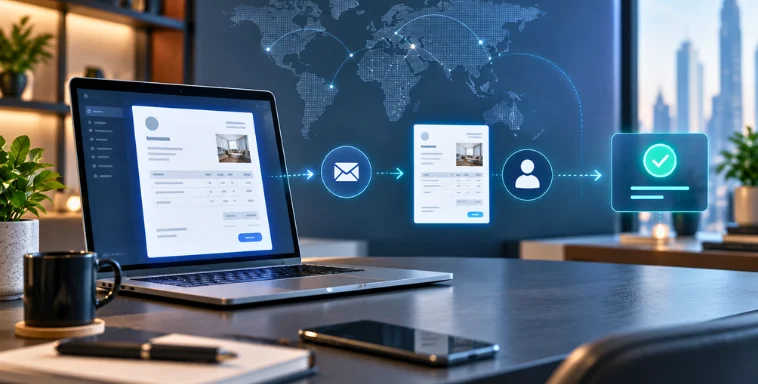
Email creates a professional record of communication.
When payment discussions happen via email:
Expectations are documented
Commitments are recorded
Dates are easy to reference
Both parties can review previous conversations
A payment reminder sent through email often receives more attention than a message buried inside a busy chat app.
Clients Take Email More Seriously
Most businesses already manage approvals, contracts, and financial discussions through email.
An email can easily be:
Forwarded to finance teams
Shared with decision makers
Tracked internally
Referenced later if needed
This makes payment conversations easier to resolve.
Avoid Fragmented Communication
One common mistake is discussing payment across multiple channels.
The invoice is emailed.
The follow-up happens on WhatsApp.
The payment update comes through a phone call.
Now nobody has a clear record of what was agreed.
Keep payment conversations centralized in email whenever possible.
If you discuss payment on a call, follow up with a brief email summary:
"Thanks for the call today. As discussed, payment is expected by June 20. Please let me know if anything further is required from my side."
This creates accountability without creating pressure.
Email Protects Both Parties
Most payment issues are resolved quickly.
But if delays continue, having a documented communication trail becomes extremely valuable.
Professional businesses treat payment conversations the same way they treat contracts and project approvals: clearly documented and easy to reference.
Use Neutral Language
The goal is to make it easy for the client to respond.
Avoid language that sounds emotional, accusatory, or frustrated.
Instead of:
"You haven't paid the invoice yet."
Try:
"I wanted to check on the status of the payment and see if there's anything needed from my side."
One creates pressure.
The other creates collaboration.
Ask Questions Instead of Making Demands
Questions encourage dialogue.
Examples include:
Has the invoice reached the appropriate team?
Is there anything outstanding preventing payment?
Can you provide an expected payment date?
Is there any additional documentation required from my side?
Questions help uncover the real reason behind the delay.
Assumptions rarely do.
Stay Calm When Clients Go Silent
Silence is often the most frustrating part.
You send a follow-up.
Nothing.
You send another.
Still nothing.
At this point, many people either become aggressive or stop following up entirely.
Neither approach works well.
Continue communicating professionally and consistently.
Persistence and professionalism can exist together.
The goal is to remain visible without becoming confrontational.
Give Clients a Face-Saving Way Out
Sometimes clients know they are late and feel uncomfortable responding.
The longer they delay, the harder it becomes to reply.
Make it easy for them.
For example:
"If payment is currently tied up in an internal process, I'd appreciate an update on expected timelines."
This allows the client to explain the situation without feeling attacked.
People respond better when they don't feel cornered.
Document Commitments Clearly
Whenever a client provides an update, summarize it clearly.
For example:
"Thank you for the update. As discussed, payment is expected by June 20. I'll check in again after that date if needed."
This creates accountability while keeping the relationship professional.
Know When to Be Firmer
Professional does not mean passive.
If multiple reminders have been ignored, it is reasonable to become more direct.
The tone can shift from:
"Just checking in."
To:
"I'd appreciate confirmation of the payment timeline, as this invoice is now significantly overdue."
The key is remaining factual.
Avoid emotional language, threats, or accusations.
Facts are difficult to argue with.
Build Better Payment Habits for Future Projects
The best way to handle late payments is to reduce the chances of them happening again.
Consider:
Taking an upfront deposit
Using milestone-based payments
Setting expectations early
Identifying payment decision makers before work begins
Discussing payment processes during onboarding
Strong client relationships are built on clear expectations.
What Successful Agencies and Consultants Understand
The most successful consultants and agencies don't see payment conversations as awkward.
They see them as part of running a professional business.
Following up on payment is not rude.
Delivering great work and expecting timely payment are both essential parts of a healthy client relationship.
The goal is not to chase clients.
The goal is to create communication habits that make payment a natural part of the engagement.
Conclusion
Late payments are frustrating, but they don't have to become confrontational.
Most clients are not refusing to pay. They're dealing with internal processes, competing priorities, or simple oversight.
The businesses that get paid consistently are not necessarily more aggressive.
They're more proactive, more consistent, and better communicators.
By staying calm, keeping payment conversations professional, using email as your primary channel, and following up consistently, you can protect valuable client relationships while ensuring your business gets paid what it's owed.
Frequently Asked Questions
Most payment delays are caused by internal approval processes, administrative bottlenecks, or competing priorities rather than intentional non-payment.
Email is generally the better option because it creates a professional record, is easier to track, and is often taken more seriously by businesses.
A polite follow-up within a few days of the due date is usually appropriate and helps prevent longer delays.
Keep your message professional and collaborative. Ask for a status update rather than immediately demanding payment.
If multiple reminders have gone unanswered and the payment is significantly overdue, it is appropriate to request a firm payment timeline while remaining professional and factual.

Olivia Bennett
Content Writer @ Alfaa
Olivia is a content writer at Alfaa who specializes in invoicing, small business, and productivity topics. She enjoys simplifying complex ideas into clear, practical insights that help business owners save time, get paid faster, and stay organized.