Manual Invoicing Problems: 7 Signs It's Time to Automate
By Alfaa Team
Stay in the loop
Get finance tips delivered to your inbox.
Picture this.
You finish a project, the client is happy, and all that is left is sending the invoice. You open an old invoice template, update the client details manually, export it as a PDF, attach it to an email, and send it.
Two weeks later, the payment still has not arrived. You search through spreadsheets and email threads trying to figure out whether the invoice was sent, viewed, or followed up on.
That is not bad luck. That is what manual invoicing processes naturally create: friction, delays, and operational chaos.
Most businesses do not realize how much time and revenue manual invoicing quietly drains until the problems start stacking up.
In this guide, we break down the seven biggest signs your invoicing process has outgrown manual systems and why invoice automation software becomes essential as your business grows.
Quick Summary
Manual invoicing becomes difficult to manage as businesses scale
Most businesses lose hours every week on repetitive billing tasks
Delayed follow-ups and payment tracking create cash flow issues
Invoice automation software solves recurring billing and payment tracking problems
Agencies, consultants, and independent contractors benefit most from automated invoicing workflows
The Hidden Cost of “Good Enough” Billing
Manual invoicing rarely fails dramatically.
Instead, small operational issues slowly build up over time:
Forgotten follow-ups
Duplicate invoices
Delayed payments
Missing invoice records
Inconsistent retainer billing
Each problem feels small individually, but together they create serious operational inefficiencies.
Businesses using manual billing systems often spend multiple hours every week on invoicing related admin work that adds no direct client value.
Sign 1: You Spend More Than 2 Hours a Week on Invoicing
Think about how much time goes into:
Creating invoices
Updating spreadsheets
Tracking overdue payments
Reconciling payments
Preparing billing summaries
For businesses managing multiple clients, this quickly adds up to several hours every week.
If invoicing consumes more than two hours weekly, your billing system is slowing down operations.
Invoice automation software eliminates repetitive tasks and dramatically reduces administrative workload.
Sign 2: You’ve Sent an Invoice with Incorrect Details
Almost every business using manual invoicing has done this at some point.
You reuse an old invoice template, forget to update the client details or pricing, and accidentally send incorrect information.
The result:
Delayed payments
Extra back and forth
Reduced credibility
Manual invoicing is naturally error-prone because it relies heavily on repetitive manual entry.
Automated invoicing software reduces these risks through saved templates and automated calculations.
Sign 3: Clients Say They Never Received Your Invoice
This is one of the most common manual invoicing problems.
You know the invoice was sent, but the client claims they never received it.
Possible reasons include the following:
Incorrect email addresses
Spam filtering
Attachment delivery issues
Generic email domains
Every delivery issue delays payment further.
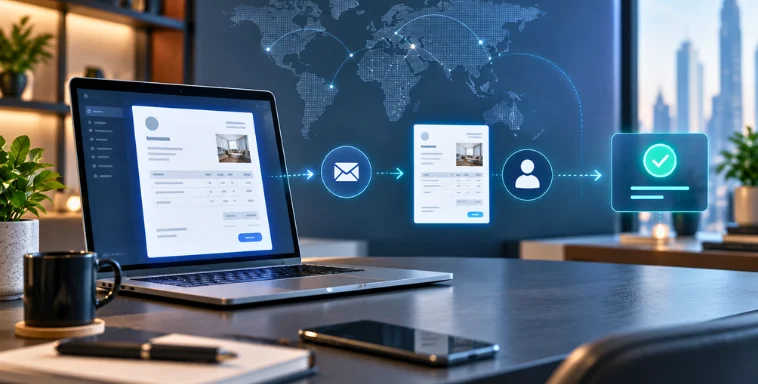
Professional invoicing software with branded email delivery and tracking helps prevent this entirely.
Sign 4: You Don’t Know Your Outstanding Invoice Total
Right now, can you instantly answer the following?
“How much money is currently unpaid across all invoices?”
If not, your invoicing process lacks visibility.
Manual systems force businesses to search across spreadsheets, emails, and bank statements just to understand payment status.
Without invoice tracking software, cash flow becomes reactive instead of proactive.
Sign 5: Retainer Clients Get Invoiced Inconsistently
Retainer billing should be predictable.
But with manual invoicing, recurring clients often get billed:
On different dates every month
Late
Or occasionally forgotten entirely
This creates inconsistent cash flow and makes business operations appear disorganized.
Recurring invoice software automates these billing cycles completely.
Sign 6: You Avoid Following Up on Overdue Invoices
One of the biggest reasons businesses struggle with late payments is simple: they avoid follow-ups.
Writing payment reminder emails manually often feels uncomfortable or awkward.
So invoices sit overdue longer than they should.
Studies consistently show that businesses following up earlier get paid significantly faster.
Invoice automation software solves this by automatically sending reminders before and after due dates.
Sign 7: Your Invoice System Exists Across Multiple Tools
Many businesses manage invoicing through disconnected systems:
Invoice files in Google Drive
Client data in spreadsheets
Payment tracking in email threads
Revenue notes scattered across apps
This fragmentation creates operational chaos.
Every payment check becomes manual reconciliation work.
Centralized invoice management software eliminates this problem entirely by keeping everything in one dashboard.
What Manual Invoicing Is Actually Costing You
Manual invoicing creates several hidden costs:
Time Loss
Hours spent on billing admin reduce time available for client work and growth.
Delayed Payments
Late invoices and inconsistent follow-ups directly impact cash flow.
Missed Revenue
Forgotten invoices and billing mistakes quietly reduce revenue over time.
Operational Stress
Scattered billing systems create ongoing mental overhead and uncertainty.
Individually, these problems may seem manageable. Combined, they create a major drag on business performance.
What to Do About It
The solution is not complicated.
Businesses need a dedicated invoice automation tool that can:
Store all client details centrally
Generate invoices quickly
Send payment reminders automatically
Track invoices in real time
Maintain payment visibility across all clients
This is exactly what modern invoice management software is designed to handle.
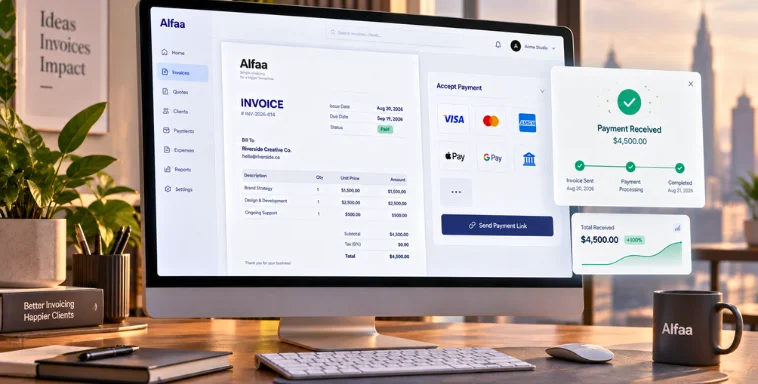
How Alfaa Solves These Problems
Alfaa is designed specifically for consultants, agencies, independent contractors, and service businesses managing recurring client billing.
With Alfaa, businesses can:
Create professional invoices in minutes
Automate recurring invoices for retainers
Send invoices directly from branded email accounts
Maintain organized client billing history
The seven signs above are all symptoms of manual operational workflows. Alfaa helps eliminate each of them through automation and centralized invoice management.
Conclusion
Manual invoicing may work temporarily, but as businesses grow, operational inefficiencies start compounding quickly.
The signs are usually easy to spot:
Delayed payments
Lost invoices
Hours spent on billing admin
Inconsistent retainer billing
Poor visibility into cash flow
Invoice automation software solves these issues by creating structured, repeatable billing workflows that save time and improve payment consistency.
Businesses that automate invoicing early reduce operational stress, improve professionalism, and create healthier cash flow as they scale.
Frequently Asked Questions
The biggest problems include repetitive admin work, delayed payments, invoicing errors, inconsistent follow ups, and lack of payment visibility.
If invoicing takes more than a couple of hours every week or payment tracking becomes difficult, it is time to automate.
No. Agencies, consultants, independent contractors, and small service businesses benefit significantly from invoice automation.
Most modern invoicing tools can be set up within minutes with minimal technical knowledge required.
No. Businesses can still send branded invoices, personalized messages, and professional communication while automating the backend workflow.

Olivia Bennett
Content Writer @ Alfaa
Olivia is a content writer at Alfaa who specializes in invoicing, small business, and productivity topics. She enjoys simplifying complex ideas into clear, practical insights that help business owners save time, get paid faster, and stay organized.