Invoice Payment Methods for Better Cash Flow
By Alfaa Team
Stay in the loop
Get finance tips delivered to your inbox.
Choosing the right invoice payment methods isn't only about speed. It affects cost, fraud risk, and how well each option fits your actual workflow. In plain terms, a payment method invoice simply means how a client pays the bill, but the choice behind it has real financial consequences most guides gloss over: what it costs you in fees, whether you're even allowed to pass that cost to the client, and how exposed you are if something goes wrong.
This guide covers the common methods with real cost figures, a framework for choosing which 2-3 to actually offer, and the questions that come up once you're past the basics: who eats the processing fee, how payment method choice affects international clients, and what happens if a payment reverses after you've already delivered the work.
Quick Comparison
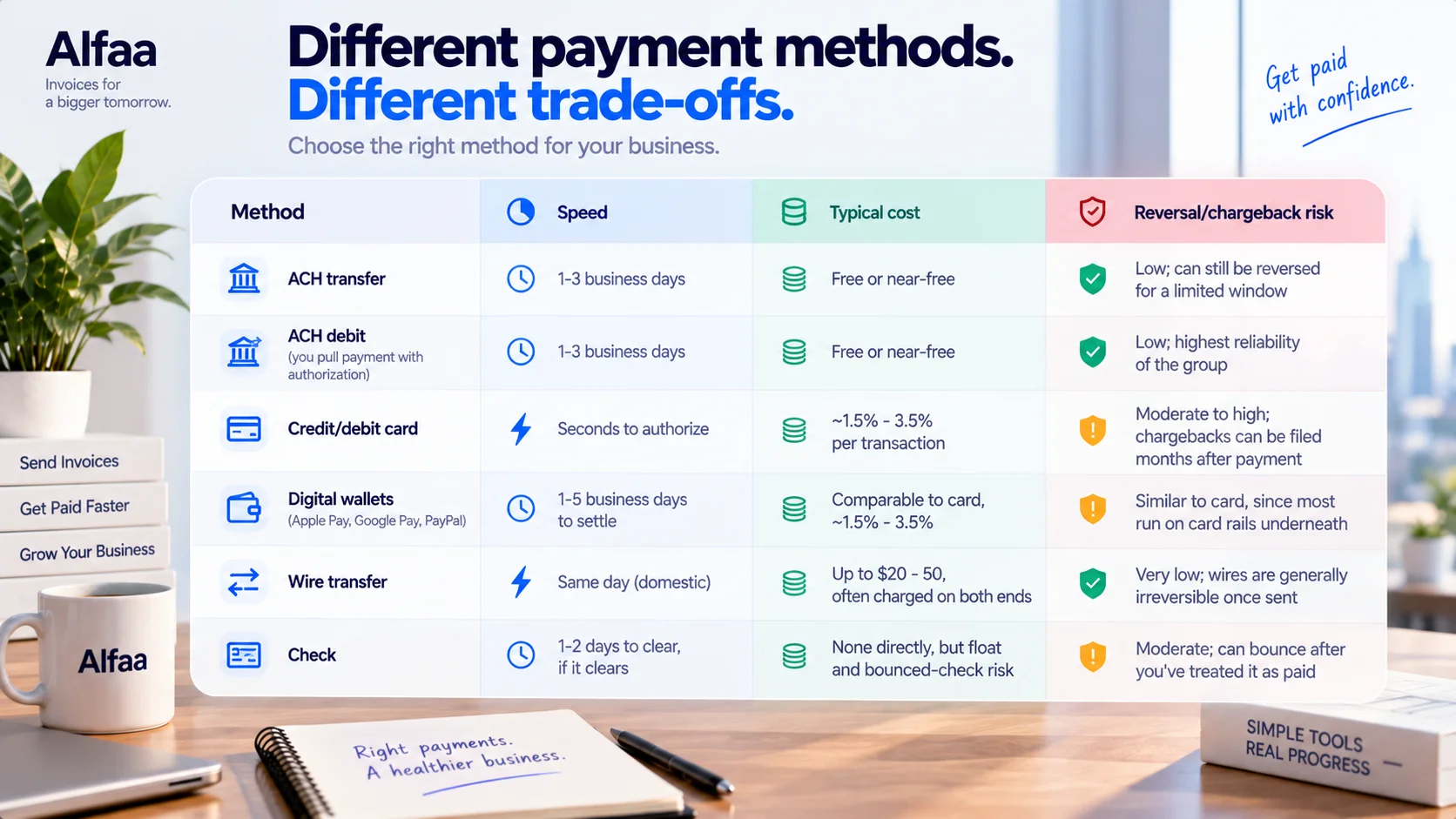
The Methods, in Plain Terms
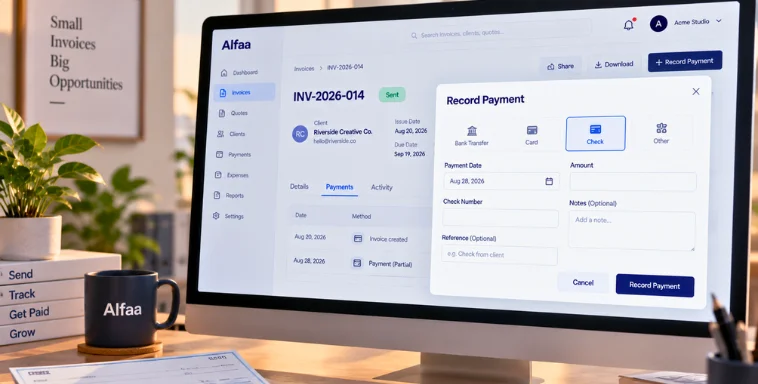
Checks are familiar but slow and manual. Once received, you wait for it to clear, and it can still bounce after the fact, at which point you're chasing a payment you may have already treated as settled.
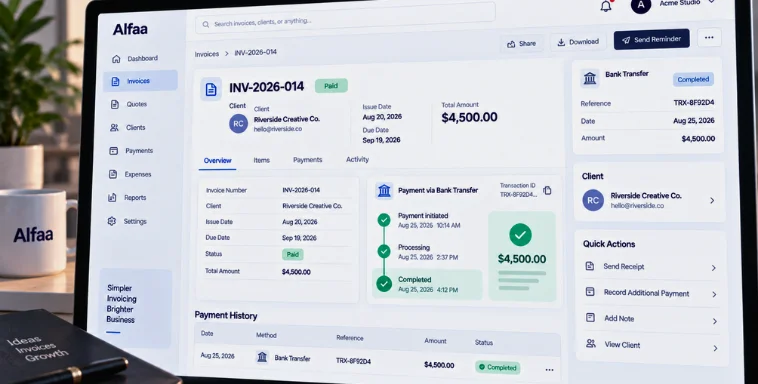
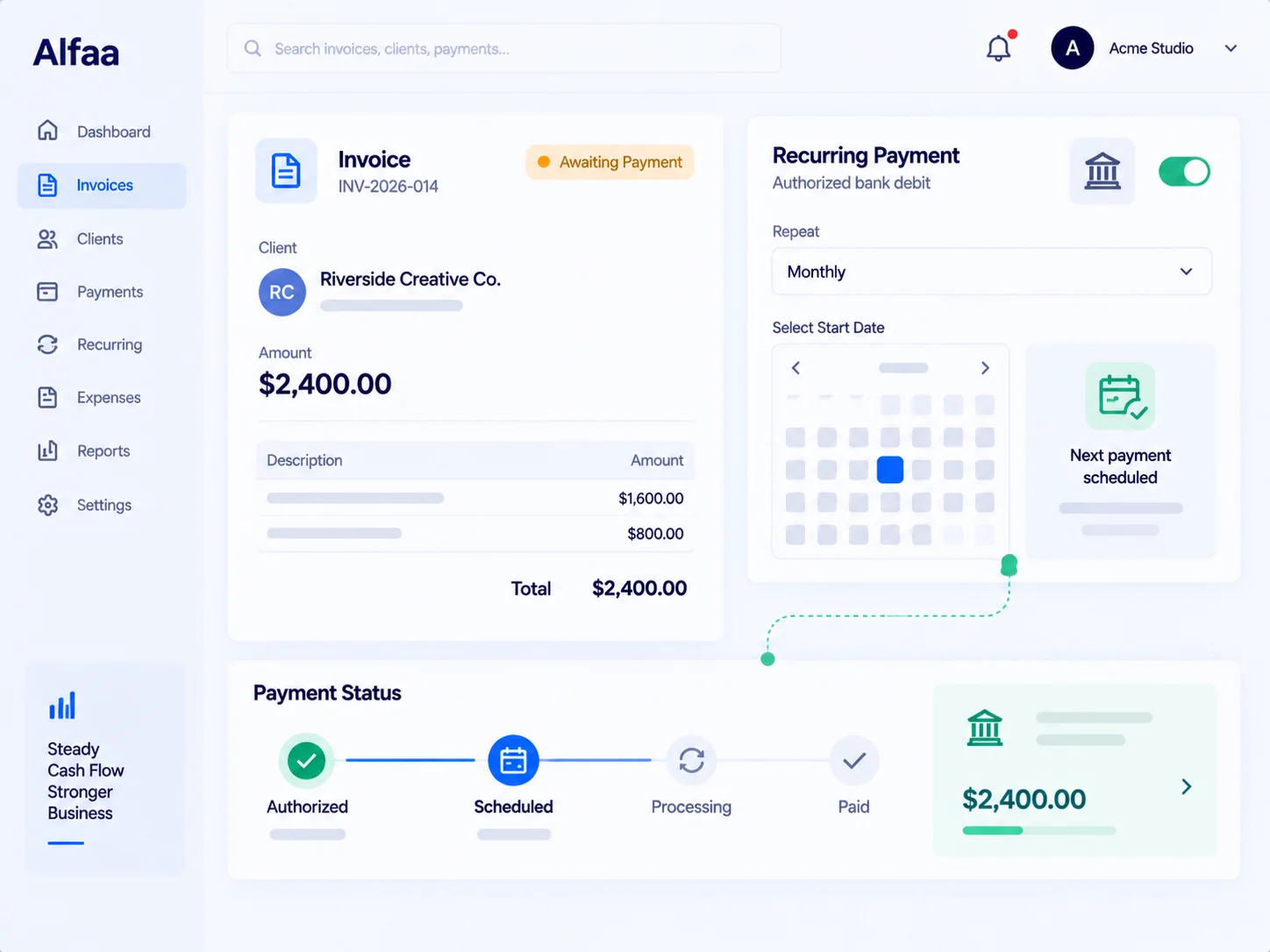
Bank transfers (ACH) are reliable and affordable, typically free or near-free, and settle in 1-3 business days. The standard version requires the client to initiate it, so timing stays somewhat in their control; ACH debit, where you pull the payment with the client's prior authorization, removes that uncertainty and is the strongest option for recurring billing specifically.
Credit cards are fast and familiar for the client, authorizing in seconds, but the 1.5%-3.5% fee adds up quickly on larger invoices. A $20,000 invoice at 3% is $600 in fees; it's worth doing that math before defaulting to card for every invoice regardless of size.
Digital wallets (Apple Pay, Google Pay, and PayPal) offer a fast, familiar checkout experience, particularly for clients used to consumer-style payment flows. Fees run comparable to cards, and B2B adoption is still uneven, best treated as a convenient secondary option rather than your primary method.
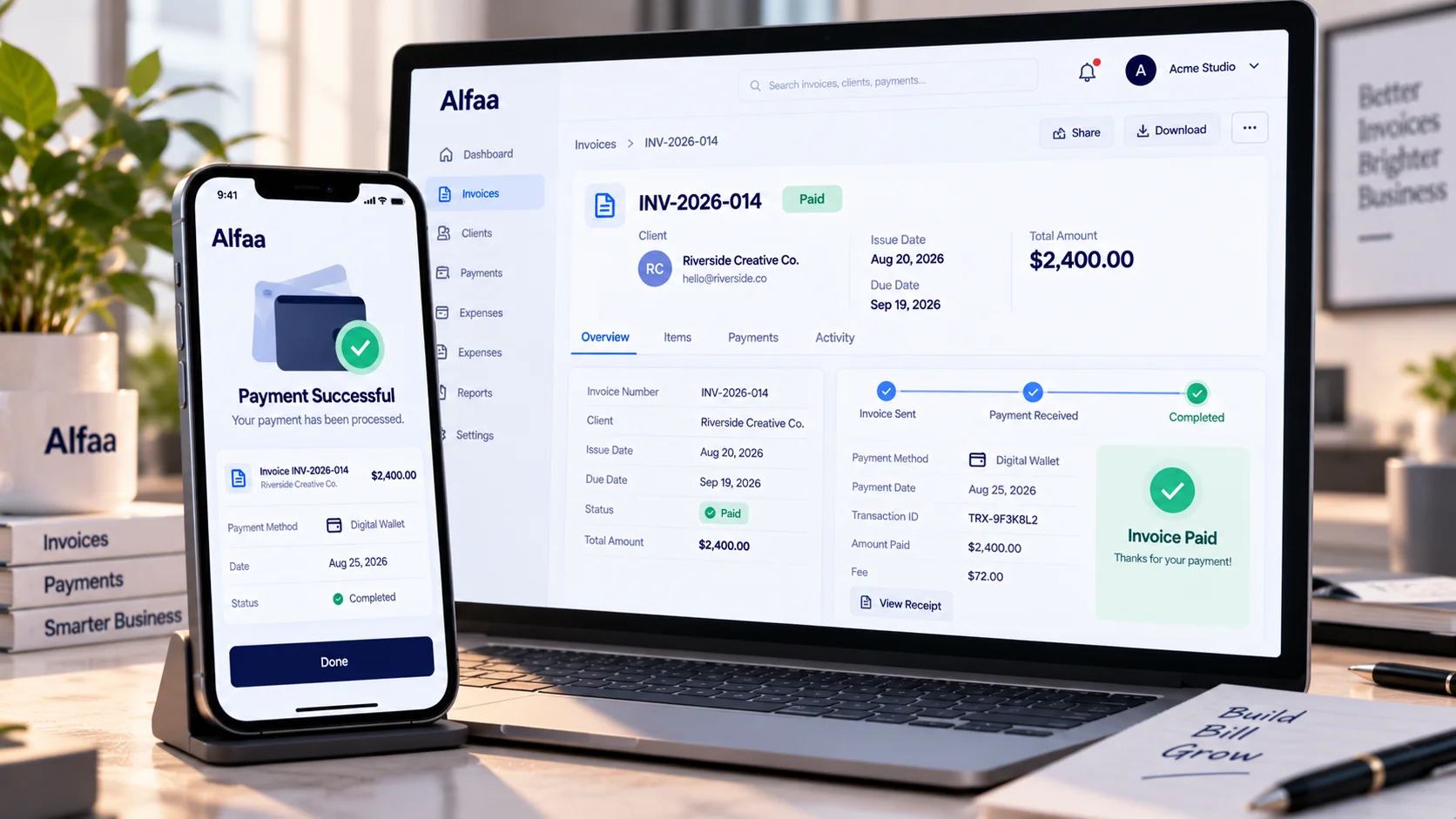
Wire transfers settle quickly, often the same day domestically, and work well for large, time-sensitive, or international payments. They're a poor fit for everyday invoicing given the fee (commonly $20-50, sometimes charged on both the sending and receiving sides).
Who Pays the Processing Fee? Surcharging and the Law
This is the question most guides skip entirely: if a client pays by credit card, can you pass that 1.5%-3.5% fee on to them, or does it come out of your margin?
In most of the US, surcharging credit card transactions is legal as of 2026, but with real limits. Visa and Mastercard cap the surcharge at 3% of the transaction (lowered from 4% in 2023) and require merchants to give the card networks 30 days' notice before starting to surcharge, a contractual requirement, not a formality you can skip. A handful of states ban credit card surcharging outright; Connecticut and Massachusetts are the clearest current examples, and a few others impose specific caps or disclosure requirements on top of the card-network rules.
Debit card surcharging is illegal in all 50 states regardless of credit card rules, and running a debit card through as if it were a credit transaction to work around this isn't a legal workaround.
A simpler and more universally accepted alternative to a surcharge is a cash discount, advertising your price at the card-inclusive rate and discounting it for ACH or check payment, which sidesteps most of the surcharge-specific legal complexity since you're not adding a fee, you're offering a discount off a fully disclosed price.
Chargeback and Reversal Risk: The Comparison Nobody Runs
Fee and speed get compared everywhere. How reversible each method is once you've been paid gets skipped almost as often:
Wires are effectively final: Once sent, a wire is very difficult to reverse, which makes it the lowest-risk method for a large invoice from a fraud-reversal standpoint, though it carries its own fraud risk on the front end (a compromised email thread redirecting where the wire is sent).
ACH can be reversed, but within limits: An ACH payment can be returned for insufficient funds or, in some cases, disputed as unauthorized, but the window for this is narrower than a card chargeback.
Card chargebacks are the highest-risk reversal: A client can dispute a card charge with their bank months after payment, and the funds can be pulled back even after you've delivered the work, with the burden of proof often falling on you to demonstrate the charge was legitimate.
Checks can simply bounce: Which isn't a reversal in the technical sense but has the same practical effect—a payment you may have already recorded as received turns out not to exist.
For a large, one-off invoice where reversal risk actually matters, this is a real argument for wire or ACH over card, separate from the fee difference alone.
Security in Invoice Payments
Security protects both trust and cash. A weak setup can expose client data, delay payments, and damage a business relationship that took real effort to build.
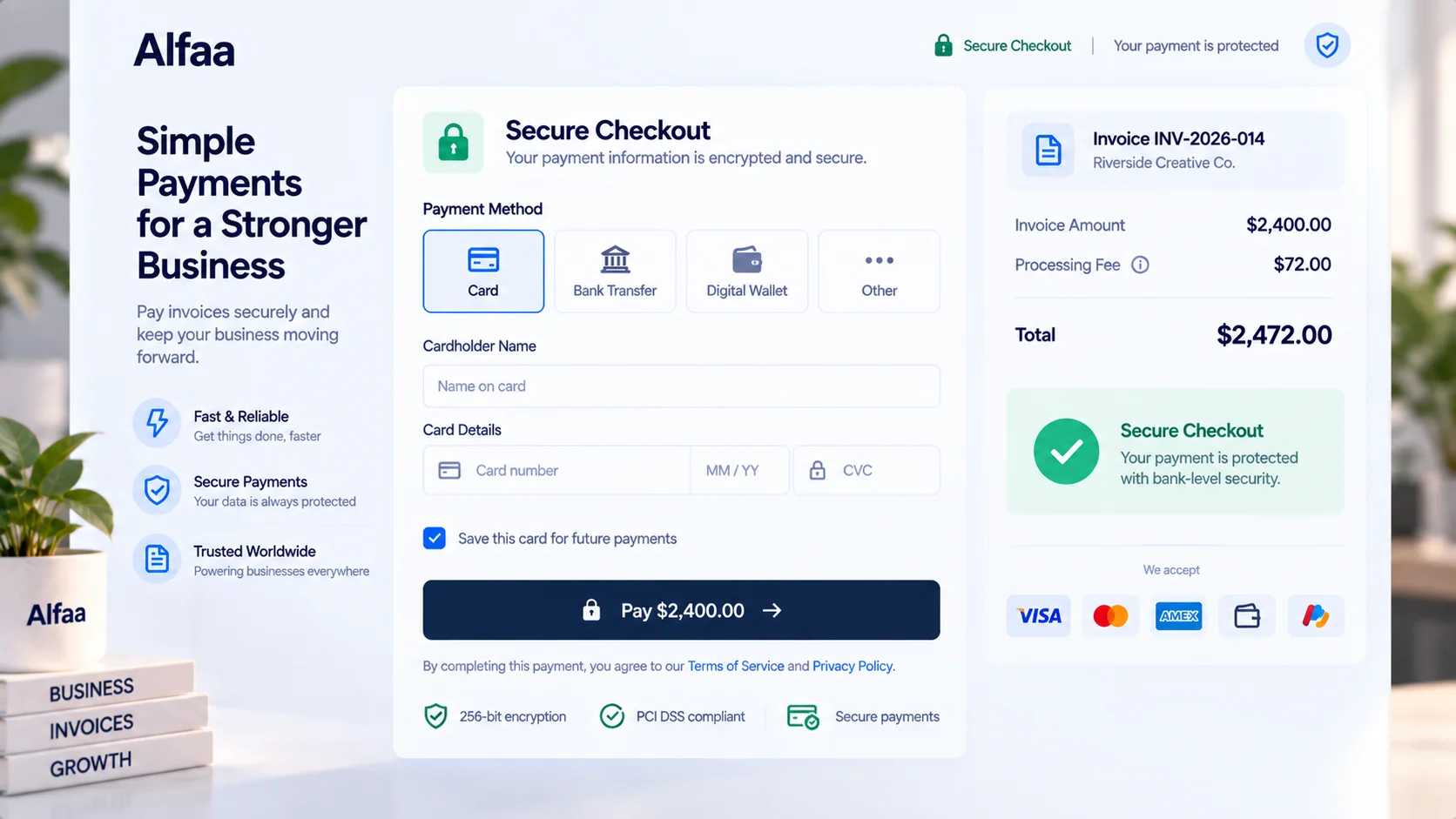
A few practical steps that matter more than most:
Use encrypted payment portals so payment data is protected while it moves, not stored or transmitted in plain text.
Verify last-minute payment detail changes by phone, not by replying to the same email thread. A common fraud pattern involves an attacker inserting themselves into an email conversation and asking a client to redirect a wire to a different account; a phone call using a number you already had, not one in the suspicious email, is the actual defense here.
Work with established payment providers rather than an unfamiliar processor, since payment infrastructure is one area where "cheaper but less proven" carries real downside.
How to Choose the Right Mix
Offering every possible payment method isn't the goal; offering the 2-3 that fit your actual invoices is.
A simple framework:
Under $5,000, one-off invoice: credit card is a reasonable default; the fee is easy to absorb or pass on, and the speed and familiarity for the client usually outweigh the cost.
Larger or recurring invoices: favor ACH, and specifically ACH debit for anything recurring, since it removes the client-initiated timing uncertainty entirely.
Large one-off or international payments: wire transfer, despite the flat fee, remains the standard choice once the amount is large enough that the fee becomes a rounding error against the payment itself.
Whatever you choose, put it in writing. A short payment policy, which states which methods you accept and any surcharge or discount that applies, stated once in your engagement terms, prevents the conversation from happening invoice by invoice.
Recurring and Subscription Billing Needs a Different Answer
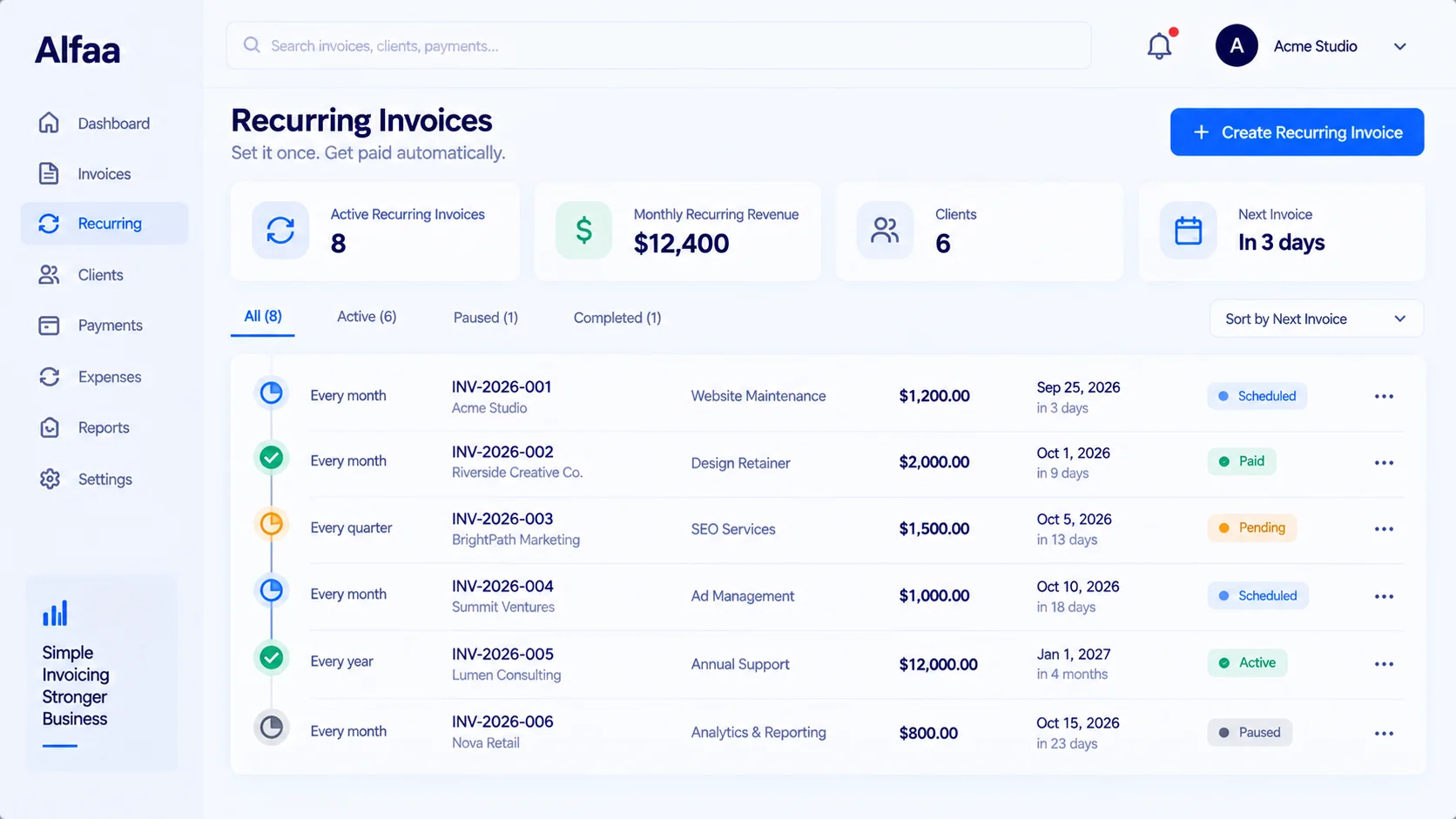
A one-off invoice and a retainer client aren't the same payment-method decision. For recurring billing specifically, ACH debit or a card kept on file with the client's authorization removes the step where they have to actively initiate payment each cycle, which is where a lot of "I forgot" delays start. The trade-off: a card on file still carries the card fee every cycle, while ACH debit stays close to free indefinitely, worth the slightly higher setup effort for an ongoing relationship rather than a single project.
International Payment Methods
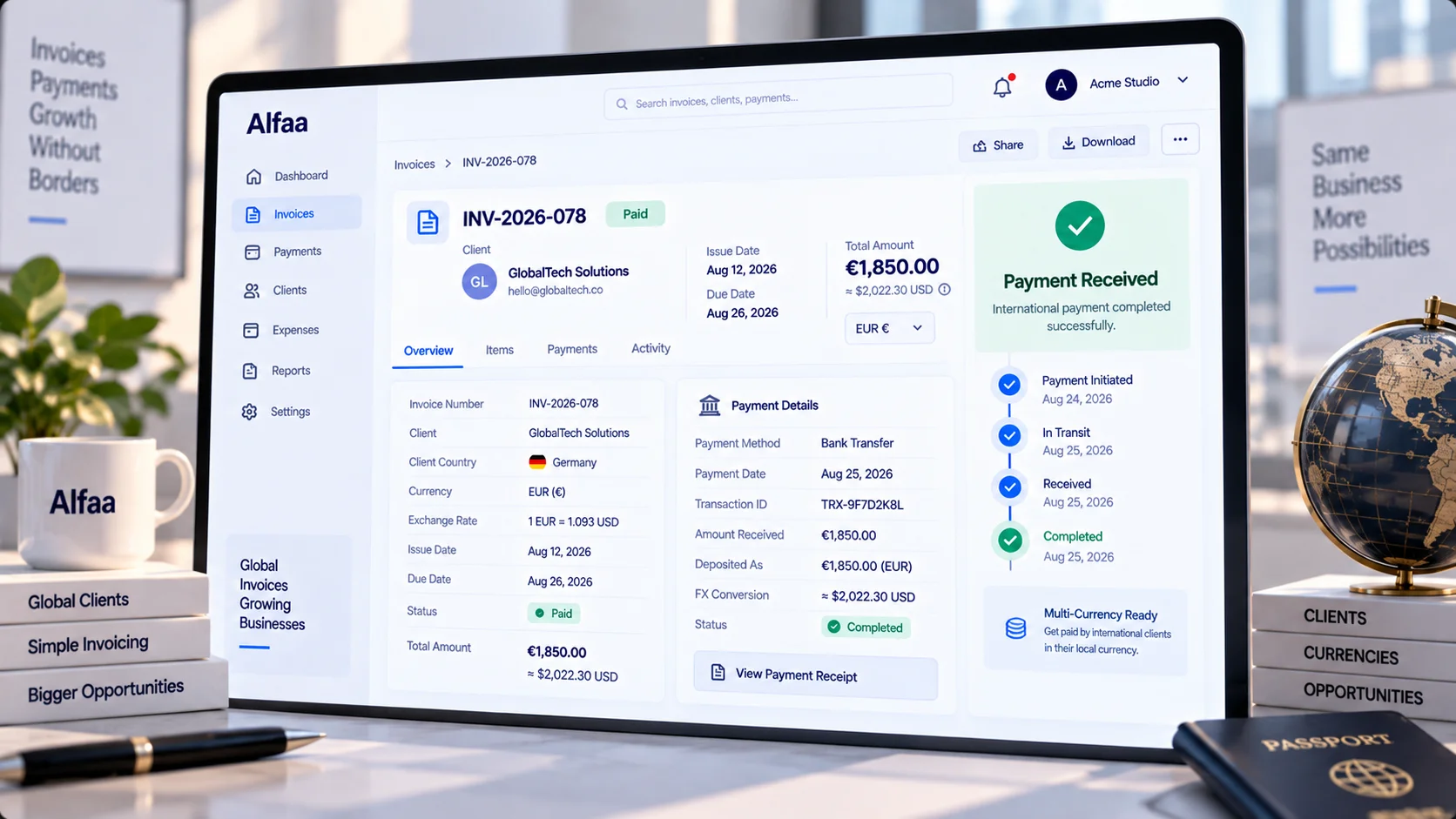
Cross-border invoicing changes the calculation. A domestic wire and an international wire aren't priced or timed the same way, and a card payment from an overseas client may route through currency conversion you don't control directly.
A few things worth knowing:
International wires (SWIFT) remain the most universally accepted method for larger cross-border payments, though fees run higher than a domestic wire and can be charged by the intermediary banks in between, not just your bank and the client's.
Digital wallets and modern transfer services increasingly handle currency conversion as part of the payment itself, often at a clearer, more competitive rate than a traditional bank wire, worth offering as an option alongside a wire for smaller international invoices.
Currency and formatting still matter on the invoice itself, regardless of which payment method the client uses. Alfaa's guides to invoicing an international client without a local bank account and multi-currency invoicing cover what needs to be correct before the payment method question even comes up.
Presenting Payment Methods on the Invoice
Advice to "offer multiple payment methods" is only useful if the client can actually see and use them without hunting. Every invoice should state clearly and without requiring a follow-up email:
Which methods do you accept
Remit-to details for a bank transfer (account and routing information) if that's an option
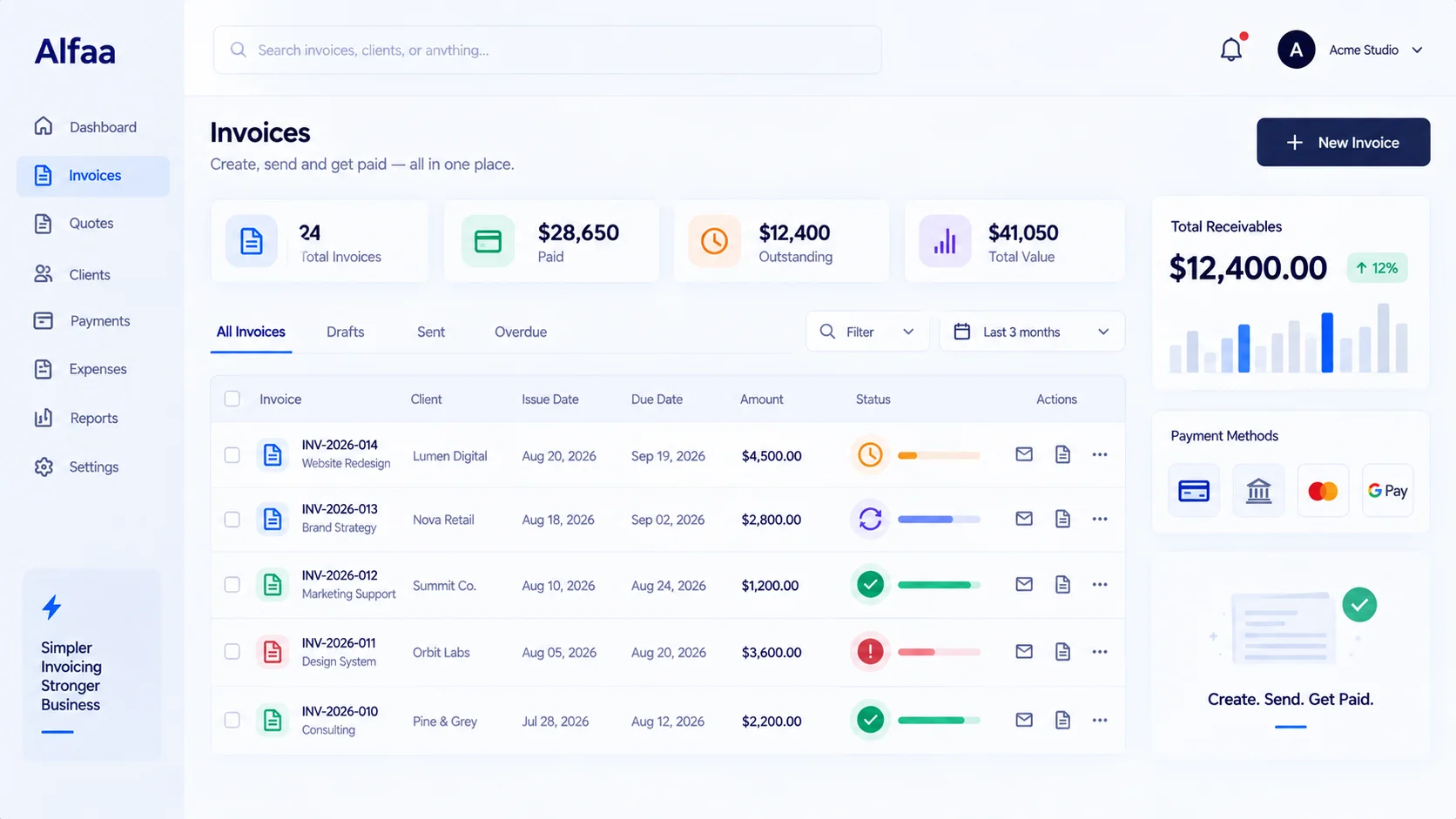
A direct payment link, if your invoicing tool supports one, so a card or digital wallet payment takes one click rather than a separate lookup
Alfaa's invoice terminology guide covers how payment terms and due dates should be worded alongside this so nothing on the invoice is ambiguous.
Automating the Collection Process
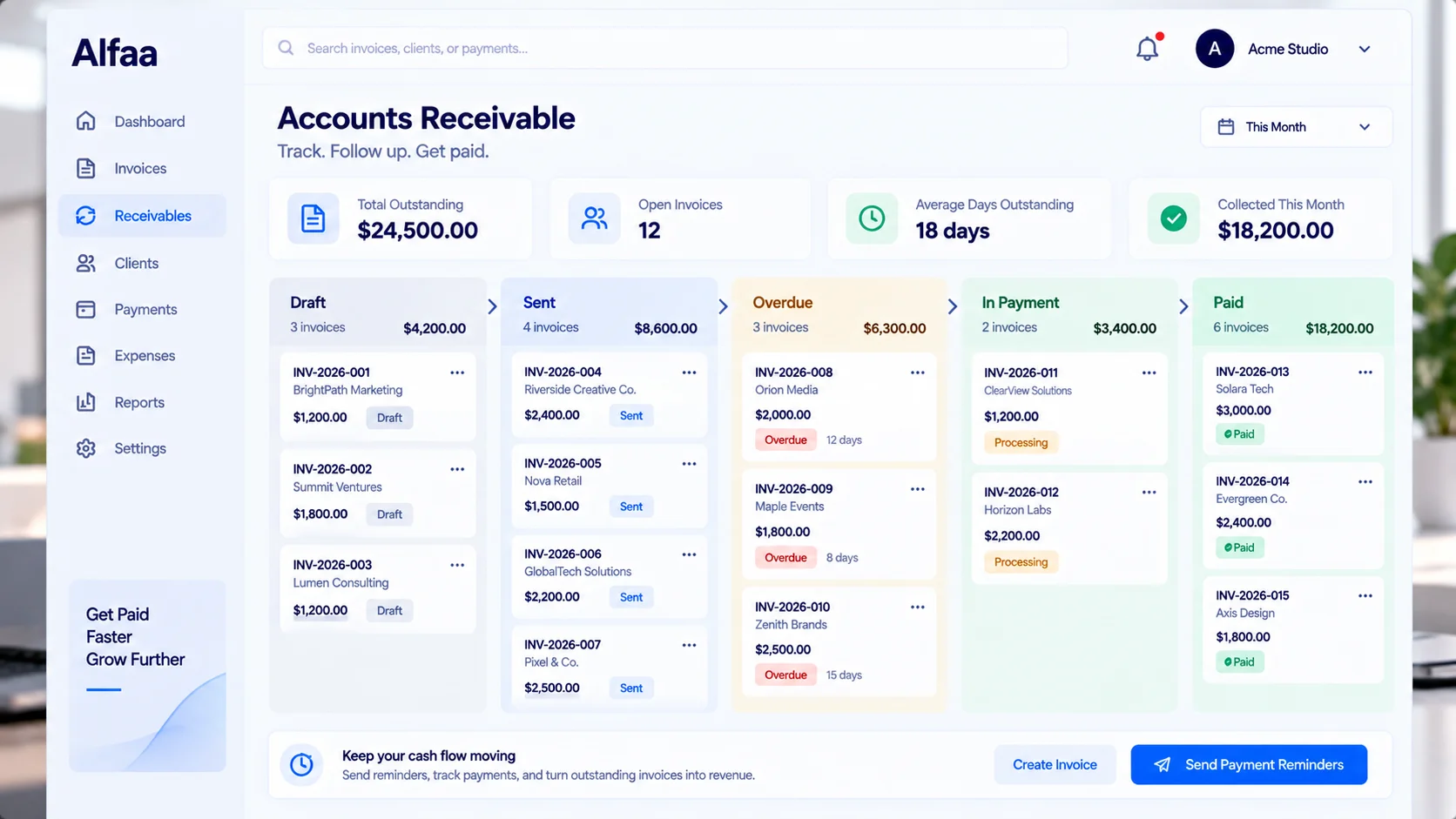
Once you've chosen your payment mix, the manual work left is mostly reminders and reconciliation, both of which automate cleanly. Automated payment reminders sent before, on, and after the due date remove the awkward manual follow-up, and real-time payment tracking matches incoming payments to open invoices automatically rather than requiring manual reconciliation against a bank statement. Alfaa's invoice automation guide covers the broader time savings available once invoicing, reminders, and tracking are all running on their own.
Payment Method Choice and Getting Paid Faster
The method you offer directly affects how long it takes to get paid and therefore your Days Sales Outstanding (DSO), the average time between invoicing and collecting. A client who has to mail a check or manually initiate a bank transfer introduces a delay that a one-click card or embedded payment link removes entirely. Alfaa's guide to reducing late payments covers DSO in more depth, including how to track whether a change you've made, including a payment method change, is actually shortening how long clients take to pay.
How Alfaa Helps
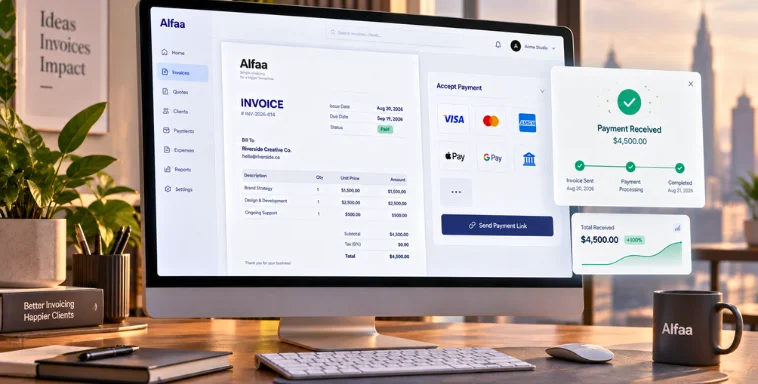
Alfaa supports card, digital wallet, and bank transfer payments on every invoice, with a payment link embedded directly so clients can pay in one click rather than hunting for remit-to details. Combined with automated reminders and real-time tracking, the payment method question becomes a one-time setup decision rather than something you renegotiate on every invoice. Start accepting payments through Alfaa today.
Conclusion
Choosing the right invoice payment methods affects far more than convenience. It changes what you actually keep after fees, how exposed you are if a payment reverses, and how long it takes to get paid in the first place.
A well-chosen mix, typically 2-3 methods matched to your invoice size and client base, stated clearly on every invoice, does more for cash flow than adding every payment option available and hoping clients sort it out themselves.
Frequently Asked Questions
Compare each option by speed, fee, reversal risk, and fit with your typical invoice size. Cards work well under $5,000; ACH, especially ACH debit, fits larger or recurring invoices; wires suit large one-off or international payments. Offering 2-3 well-chosen methods beats offering all of them without a policy behind the choice.
In most US states, yes, subject to a 3% cap set by Visa and Mastercard and a required 30-day notice to the card networks before you start. A few states ban credit card surcharging outright, and debit card surcharging is illegal everywhere. Confirm your specific state's current rule before implementing one.
A card payment can be charged back by the client's bank months after you've been paid and delivered the work. A wire, once sent, is effectively final. For a large invoice, that reversal risk is a real reason to prefer wire or ACH over card, independent of the fee difference.
Often, yes. International wires remain the standard for larger cross-border payments, though fees run higher than domestic wires. Digital wallets and modern transfer services increasingly offer competitive currency conversion for smaller international invoices as an alternative.
Encrypted payment portals, verification of any last-minute payment detail changes by phone rather than email, and an established, reputable payment provider. These reduce fraud risk and protect both your business and your client's data.
Automated reminders and real-time payment tracking remove the manual follow-up and reconciliation work that otherwise scales with how many clients you bill, freeing time for higher-value work rather than administrative upkeep.

Olivia Bennett
Content Writer @ Alfaa
Olivia is a content writer at Alfaa who specializes in invoicing, small business, and productivity topics. She enjoys simplifying complex ideas into clear, practical insights that help business owners save time, get paid faster, and stay organized.