How to Reduce Late Payments: Proven Invoicing Strategies That Work
By Alfaa Team
Stay in the loop
Get finance tips delivered to your inbox.
Introduction
Late payments are one of the biggest challenges for independent contractors, consultants, agencies, and small businesses.
When invoices remain unpaid, cash flow becomes unpredictable. Operations slow down, financial planning gets harder, and unnecessary stress builds up.
The problem is not always the client. In many cases, delayed payments happen because of unclear invoicing systems, inconsistent follow-ups, or manual billing processes, and most advice on this topic treats the problem as something you only address after an invoice is already overdue: send a reminder, offer a discount, or maybe charge a fee. Fewer guides address what actually prevents the delay in the first place or how to know objectively whether your fixes are working.
The good news is that most late payment issues are preventable, both before you send an invoice and after.
In this guide, we break down practical invoicing strategies that help businesses get paid faster and more consistently, including a way to measure your progress, real reminder and follow-up wording, and what the law actually lets you charge for a late payment.
Why Late Payments Happen
There are several common reasons why businesses experience payment delays:
Unclear payment terms
Manual invoicing errors
Lack of follow-ups
Complicated payment processes
Clients forgetting or deprioritizing invoices
Unresolved disputes over the invoice itself, which quietly stall payment while everyone waits for someone else to raise it
For international clients specifically, currency conversion timing, cross-border banking delays, and foreign public holidays that slow down an accounts payable process, you have no visibility into
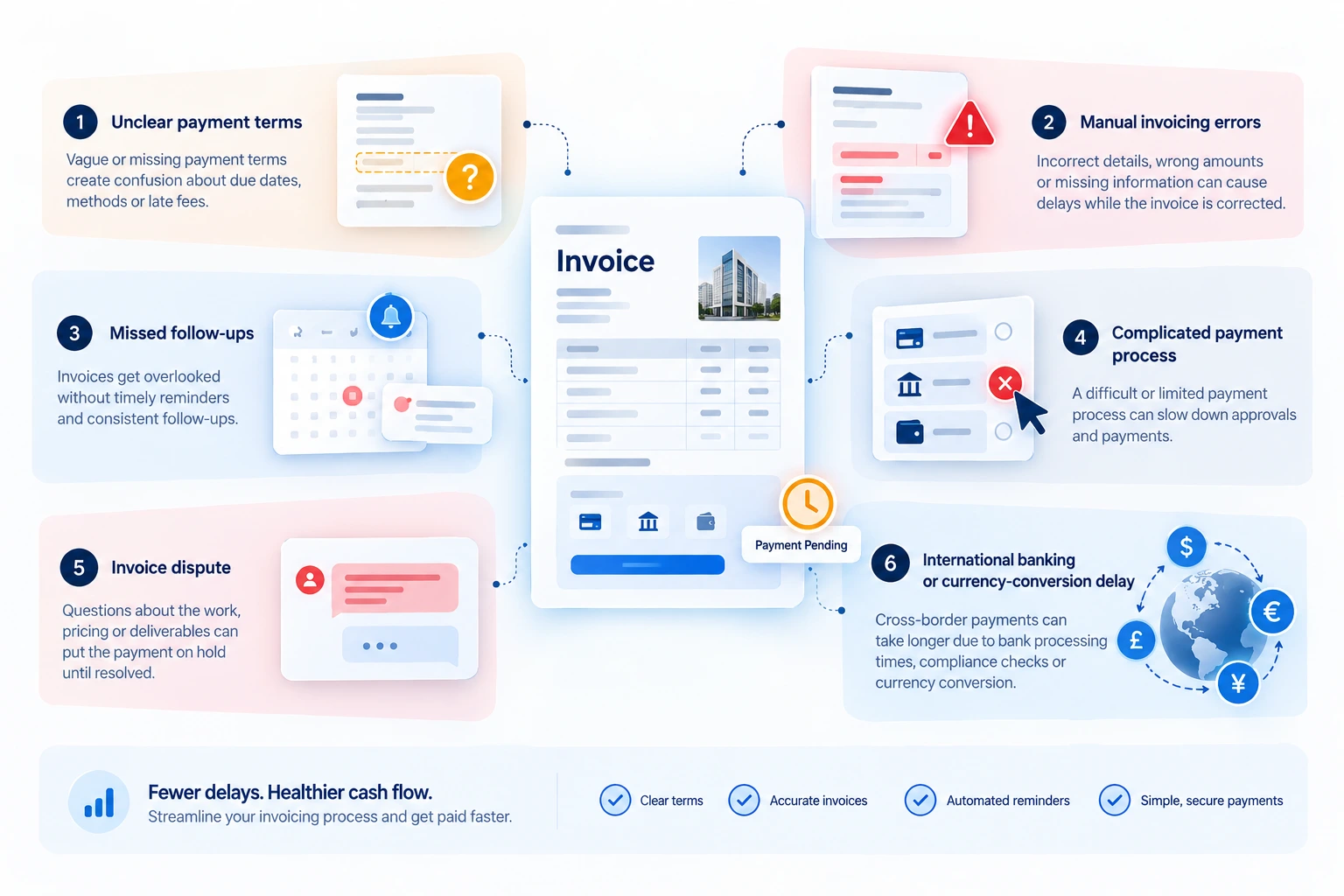
Most late payment problems are operational, not personal. Once you improve your invoicing system, payment consistency improves dramatically.
Measure It First: Days Sales Outstanding (DSO)
Before changing anything, it helps to know your actual starting point. Days Sales Outstanding (DSO) is the standard way to measure how long, on average, it takes clients to pay you:
DSO = (Total Accounts Receivable ÷ Total Credit Sales) × Number of Days in the Period
For example, if you're owed $15,000 across open invoices at the end of a 30-day month, and you billed $30,000 in total that month, your DSO is (15,000 ÷ 30,000) × 30 = 15 days. A rising DSO over several months is a concrete signal that late payments are getting worse, even if it doesn't feel that way day to day; a falling DSO after you make a change (a new reminder cadence, tighter terms with a specific client) is the clearest proof that change actually worked.
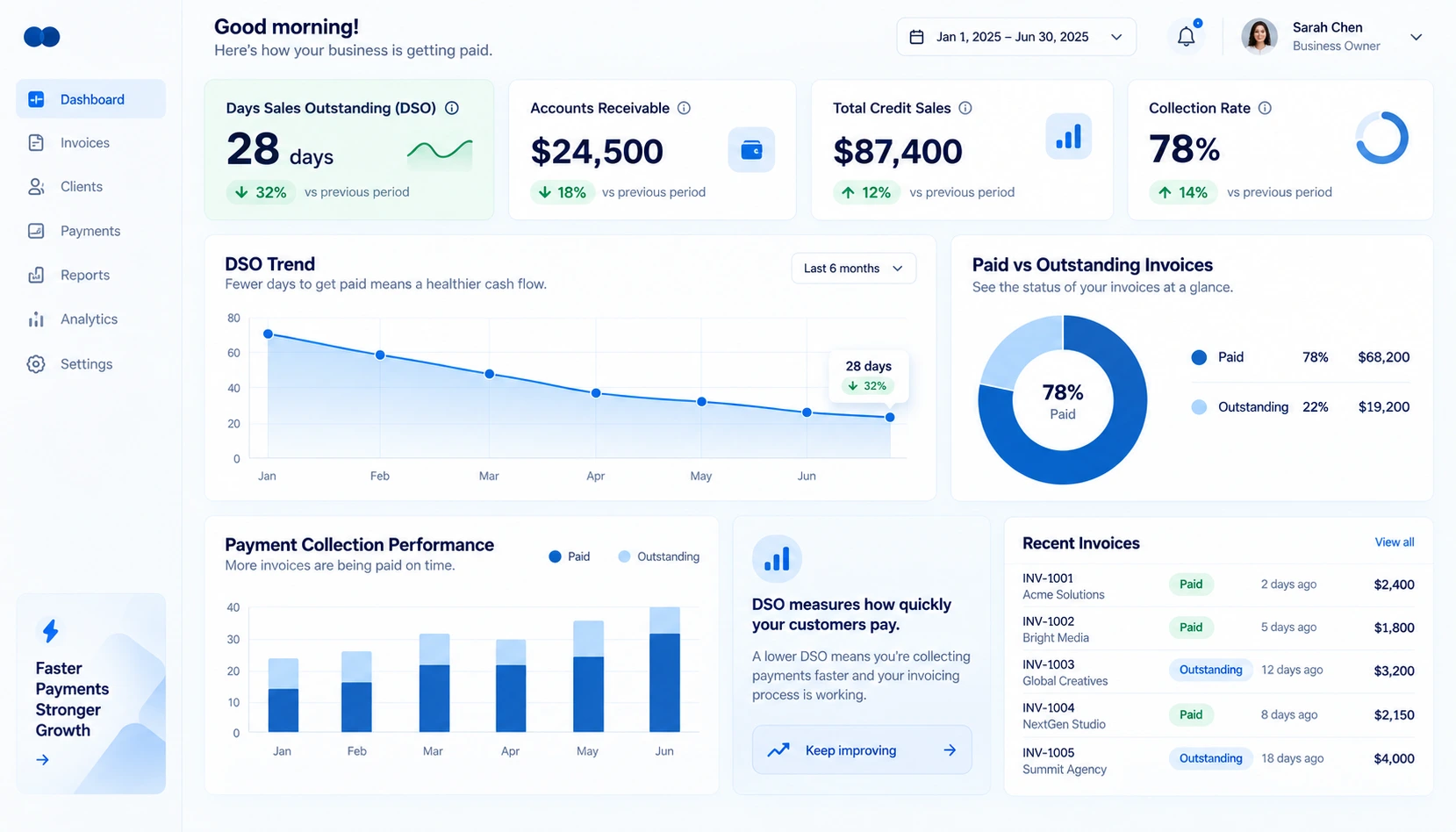
Tracking DSO monthly turns "reminders seem to be helping" into an actual number you can point to.
Prevent Late Payments Before You Ever Send an Invoice
Most advice on this topic starts at the moment an invoice goes out. A few things worth doing earlier:
Set shorter terms for new clients. There's no rule requiring every client to get the same payment terms. A new client with no payment history with you can reasonably start on Net 15 or even due-on-receipt, moving to Net 30 once they've established a track record of paying on time.
Require a deposit for larger projects. A deposit before work begins (commonly 25-50% for project-based work) reduces how much is ever at risk of becoming a late payment, since only the remaining balance is exposed.
Keep a card or payment method on file for recurring clients. For retainer or subscription-style billing, authorizing a card on file removes the step where a client has to actively initiate payment each cycle, which is where a lot of "I forgot" delays start.
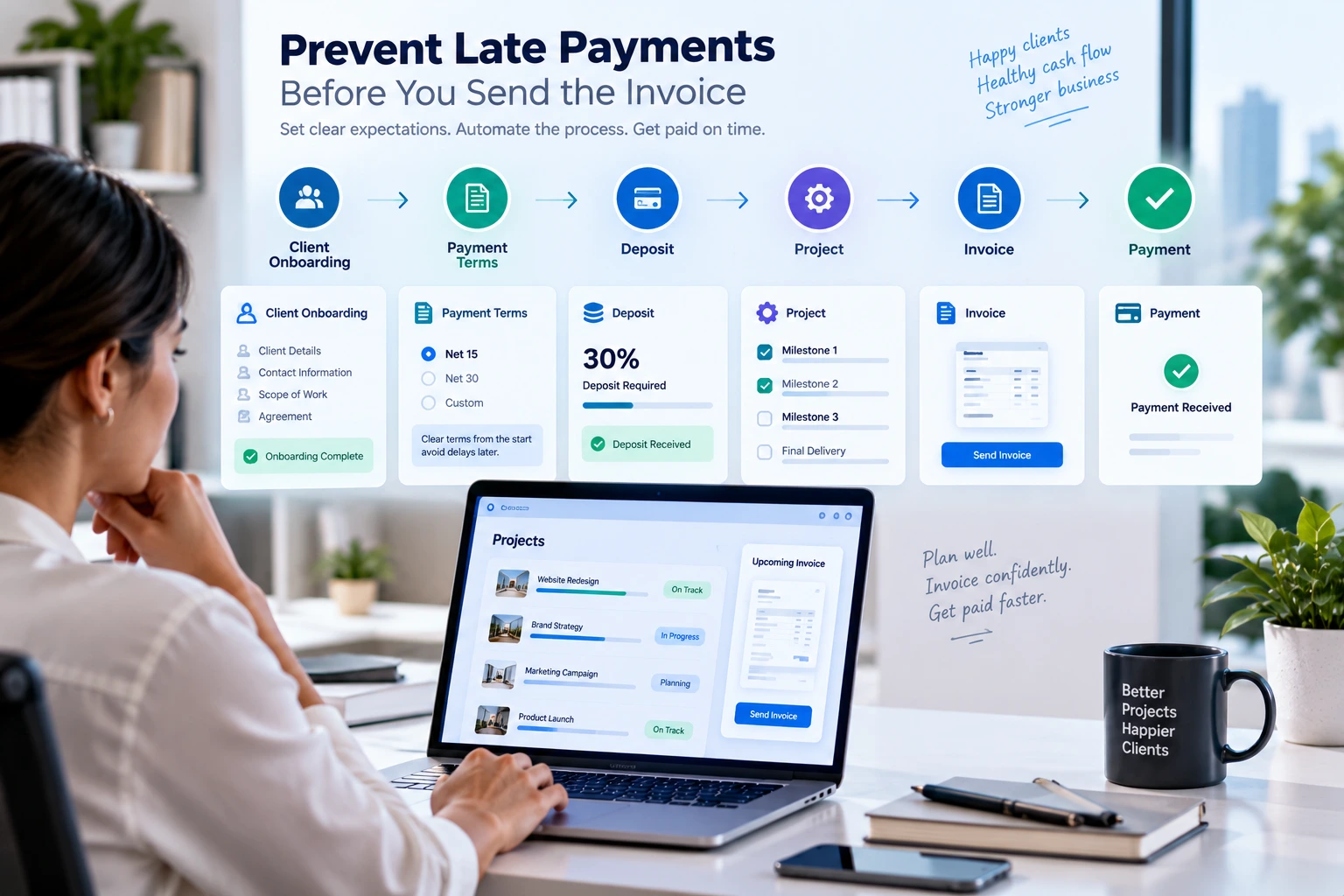
None of this replaces good invoicing practices once the bill is sent, but it shrinks how much of your revenue is ever exposed to the late-payment problem in the first place.
Set Clear Payment Terms from Day One
Clear payment expectations reduce confusion and improve payment speed.
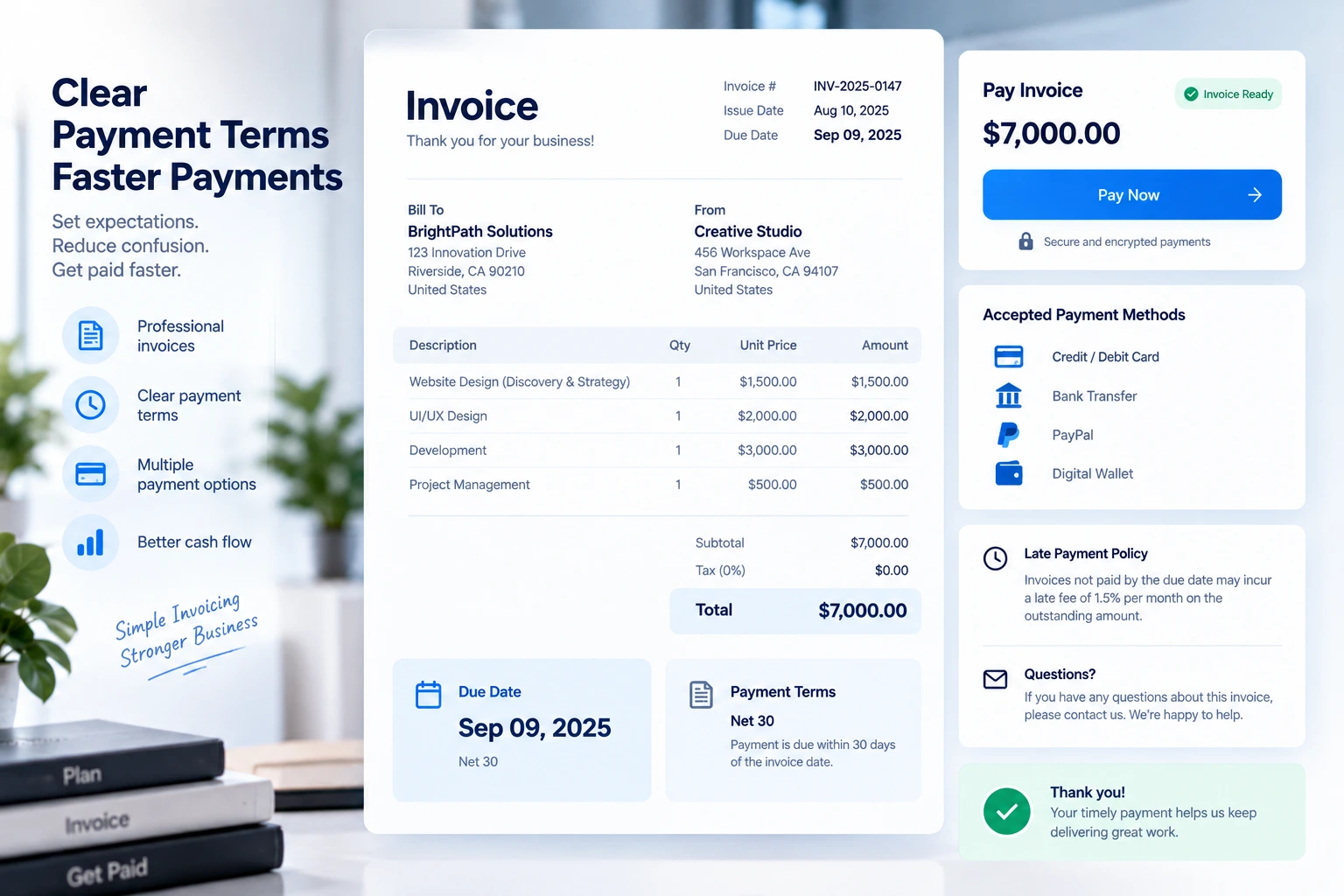
Every invoice should clearly mention:
Payment due date, such as Net 7 or Net 15
Accepted payment methods
Late payment penalties if applicable
Professional invoicing software helps standardize these terms across every invoice. Alfaa's invoice terminology guide covers exactly how due dates and payment terms should be phrased so there's no ambiguity for the client.
Shorter payment terms usually lead to faster payments.
Send Invoices Immediately
The longer you wait to invoice, the longer clients take to pay.
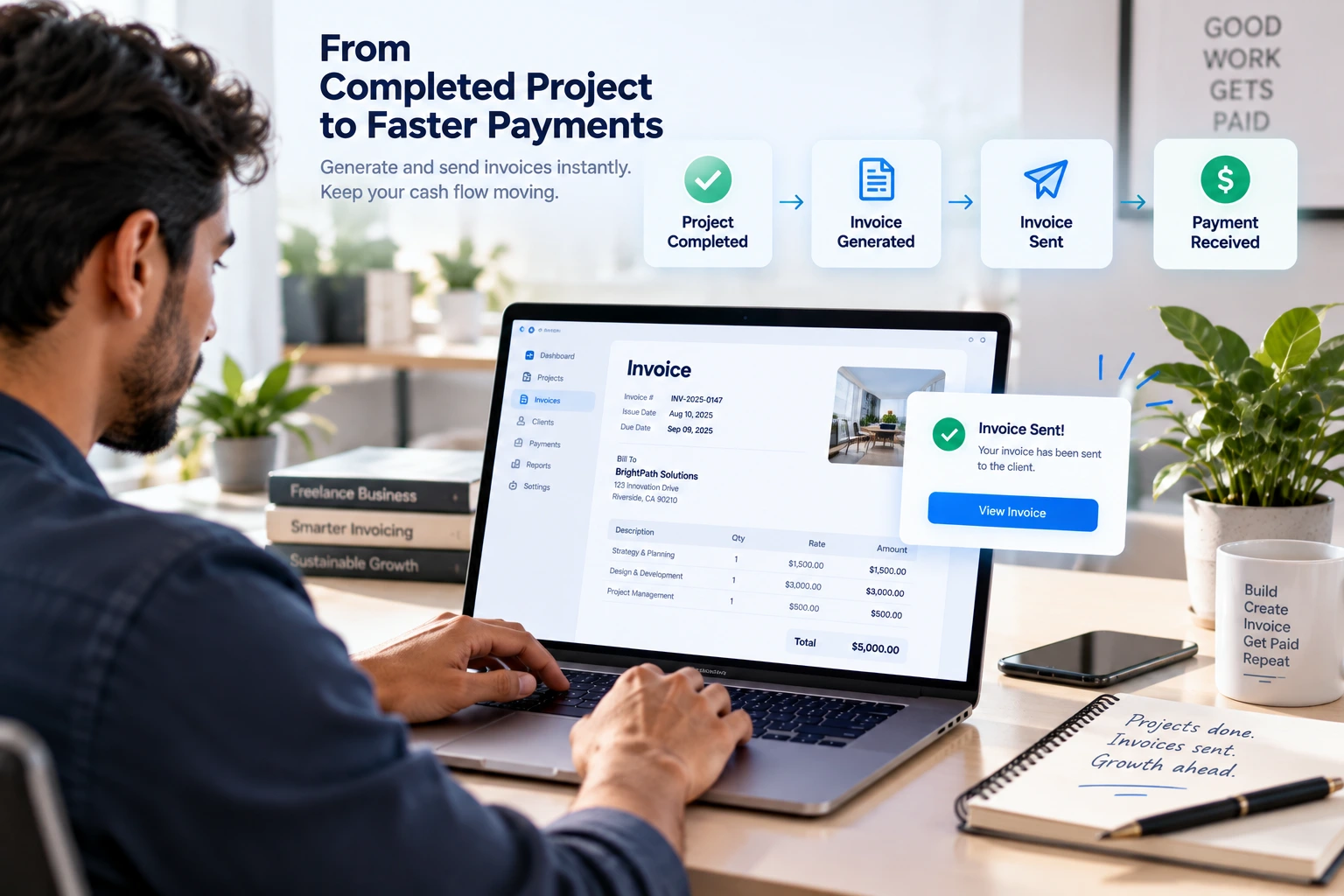
Best practices include:
Sending invoices immediately after project completion
Using automated invoicing software
Avoiding weekly or monthly invoice batching
Online invoice generator tools make instant invoicing easy and reduce delays.
Use Professional Invoicing Software
Manual invoicing increases the risk of mistakes, forgotten invoices, and missed follow-ups.
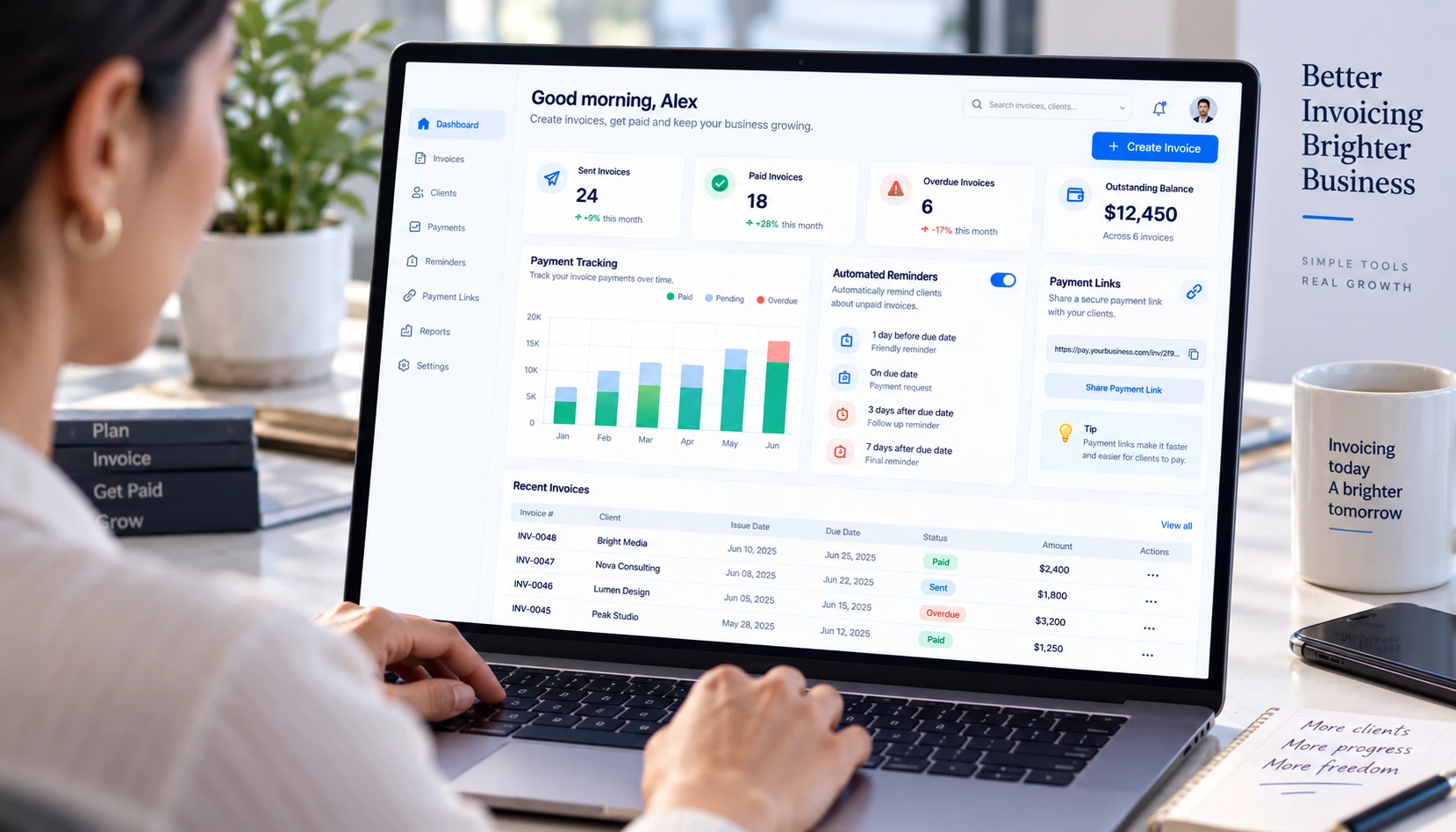
Using invoice management software provides the following:
Automated payment reminders
Real-time invoice tracking
Faster payments through integrated payment links
Tools like Alfaa help automate invoicing and reduce manual administrative work. A professional-looking invoice also gives a client less reason to set it aside or question its legitimacy, which matters more for payment speed than it might seem.
Offer Multiple Payment Options
Clients pay faster when the payment process is simple.
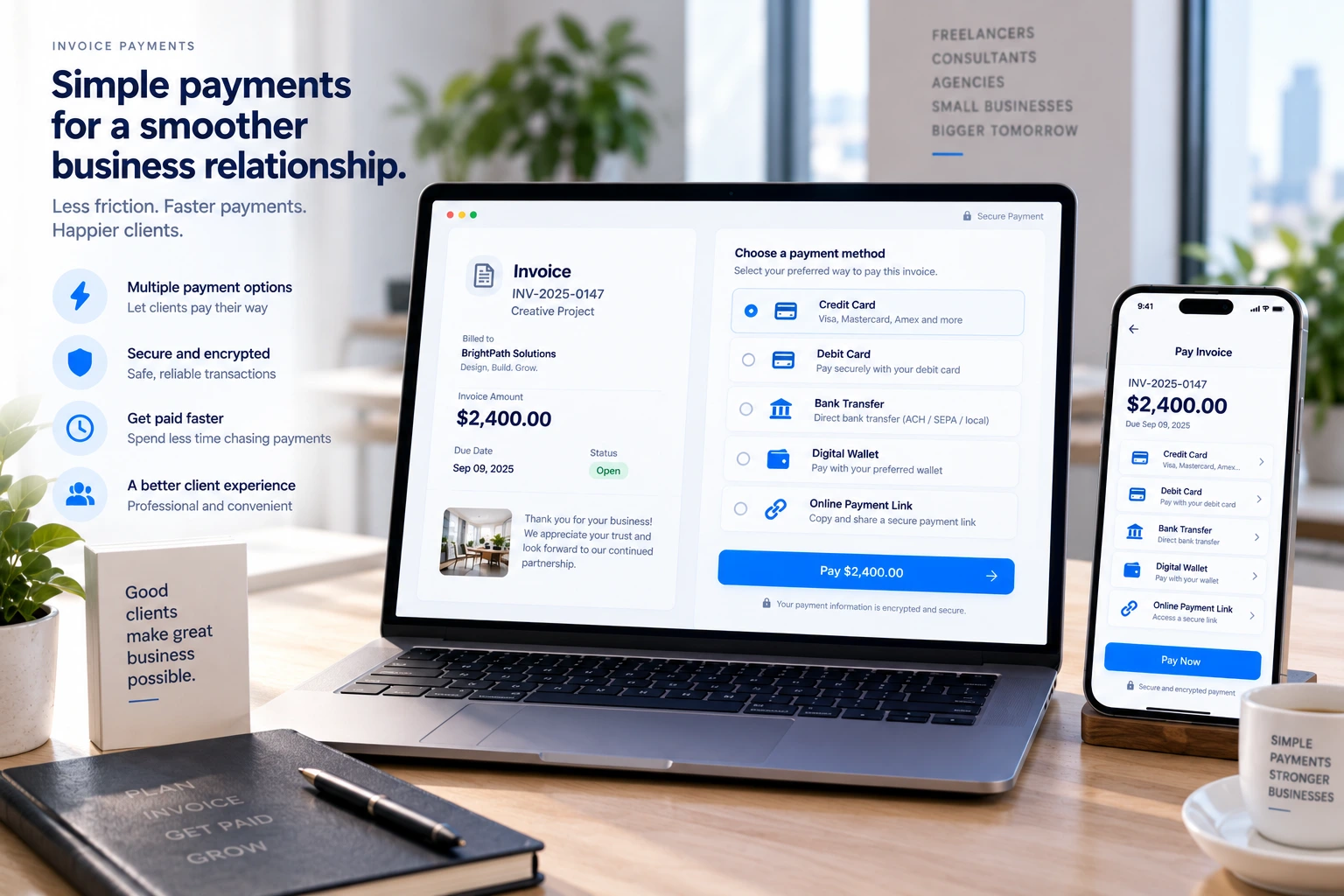
Offer flexible payment options such as
Credit and debit cards
UPI or bank transfers
Digital wallets
Fewer payment barriers lead to quicker payments. Modern billing software for small businesses often includes built-in payment integrations.
Automate Payment Reminders on an Actual Schedule
Clients do not always delay intentionally. Often, they simply forget.
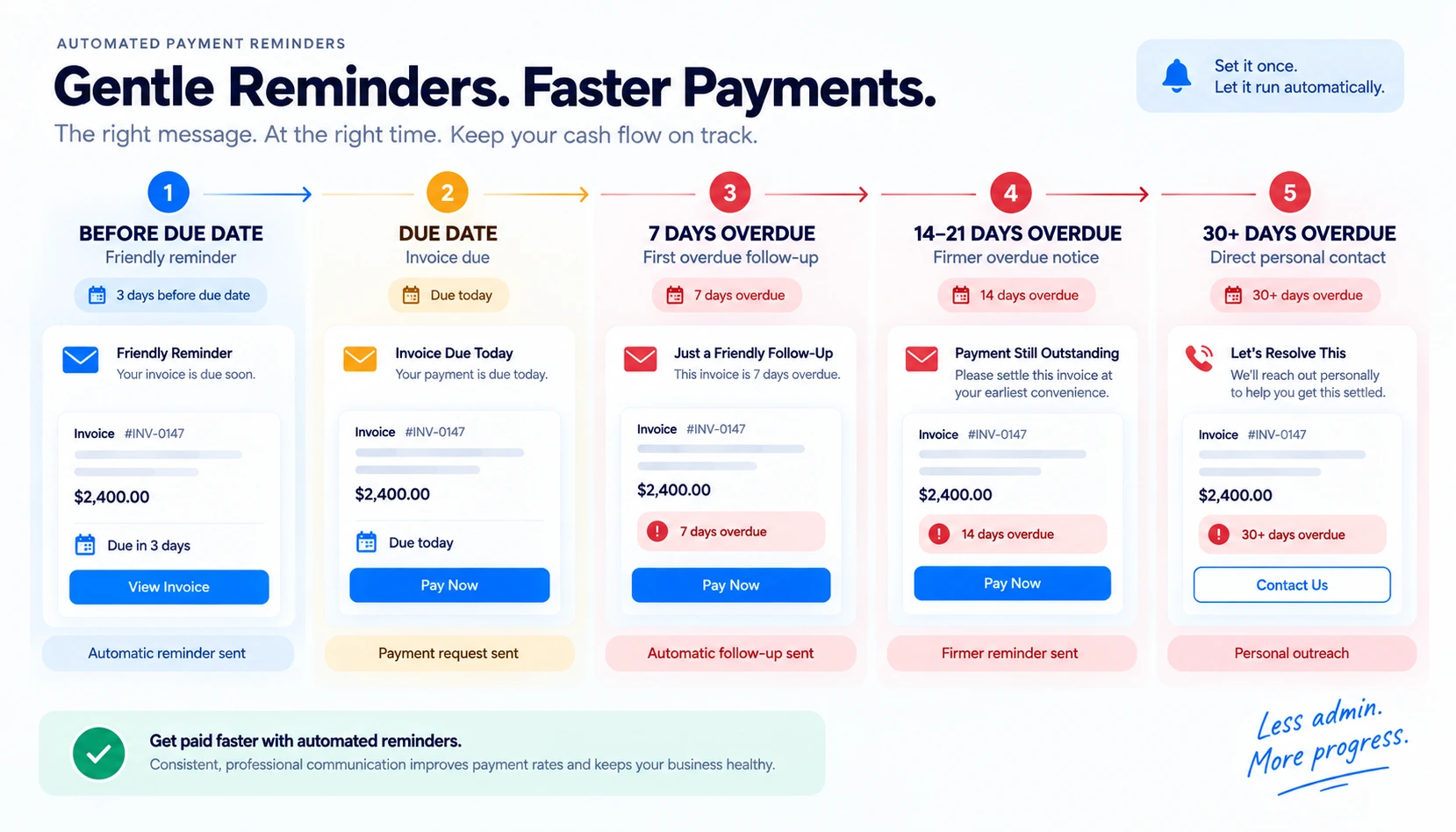
"Send reminders" isn't a plan on its own, the cadence matters. A structure that works for most client relationships:
A few days before the due date: A friendly heads-up, not a warning, just a reminder that payment is coming due.
On the due date: A neutral confirmation that the invoice is now due, in case it slipped past the client's own process.
7 days overdue: A firmer, still polite follow-up restating the amount and due date.
14-21 days overdue: Reference the invoice number directly, note how many days overdue it now is, and mention any late fee that applies.
Beyond 30 days: Move the conversation off automated reminders, a direct call or personal email tends to work better than a fifth automated nudge.
Alfaa's automated payment reminders handle the first few stages of this on schedule, and Alfaa's breakdown of why clients pay late goes deeper into the underlying causes if reminders alone aren't fixing the pattern with a specific client.
Invoice automation software ensures reminders are sent consistently without awkward manual chasing.
Be Proactive About Dispute Resolution
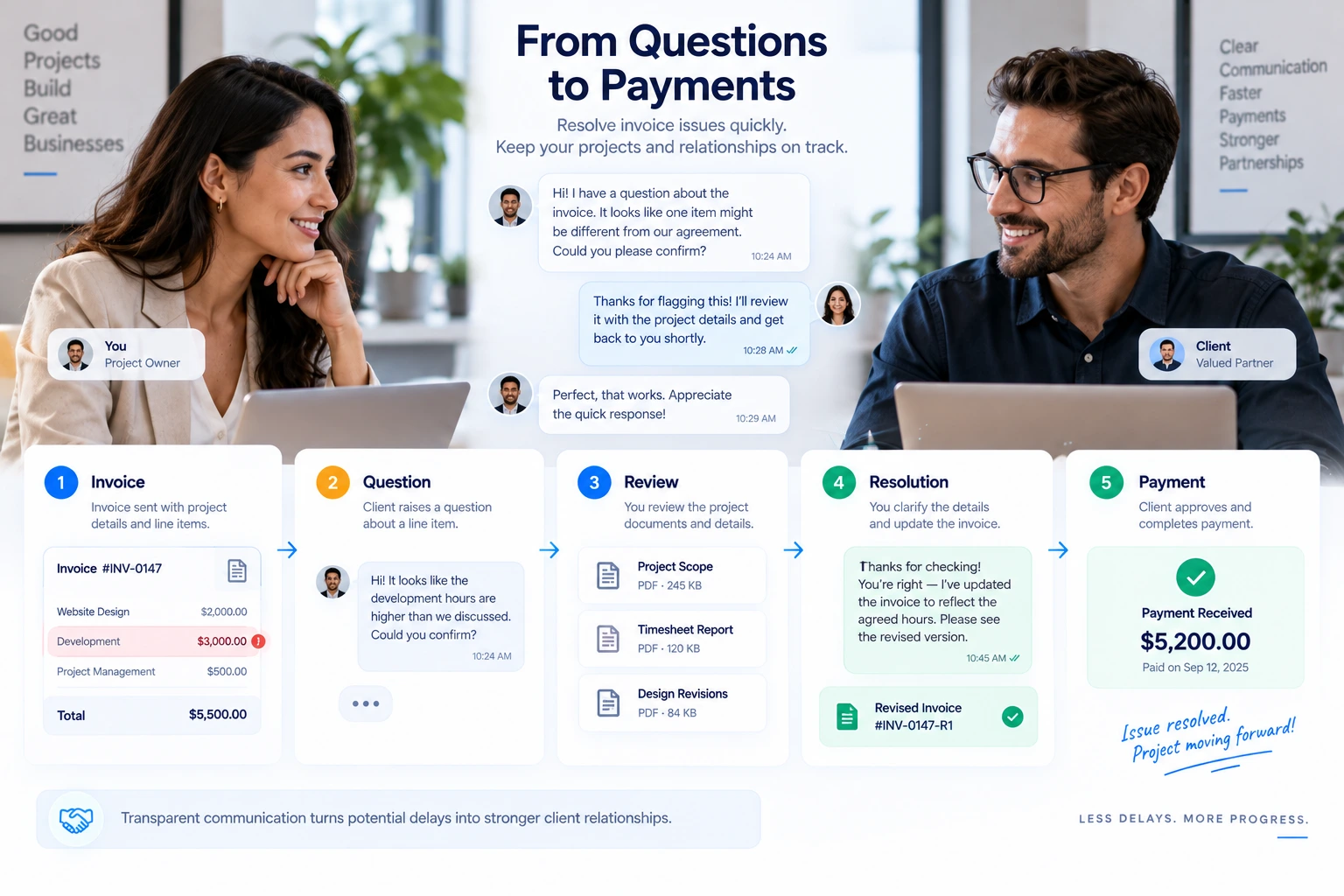
A disputed invoice doesn't look late in your system the way a forgotten one does, it just sits, often because the client is waiting for you to notice before they raise it. A few habits prevent this from silently extending your DSO:
Confirm invoice receipt and ask directly if anything looks off, rather than waiting for silence to mean agreement.
If a client flags a discrepancy, resolve or acknowledge it within a day or two rather than letting it sit in an email thread, the longer a dispute goes unaddressed, the further back in the queue that payment slides.
Keep a record of what was agreed and delivered so a dispute can be resolved by pointing to specifics, not memory.
Incentivize Early Payments
Positive incentives can encourage faster payments.
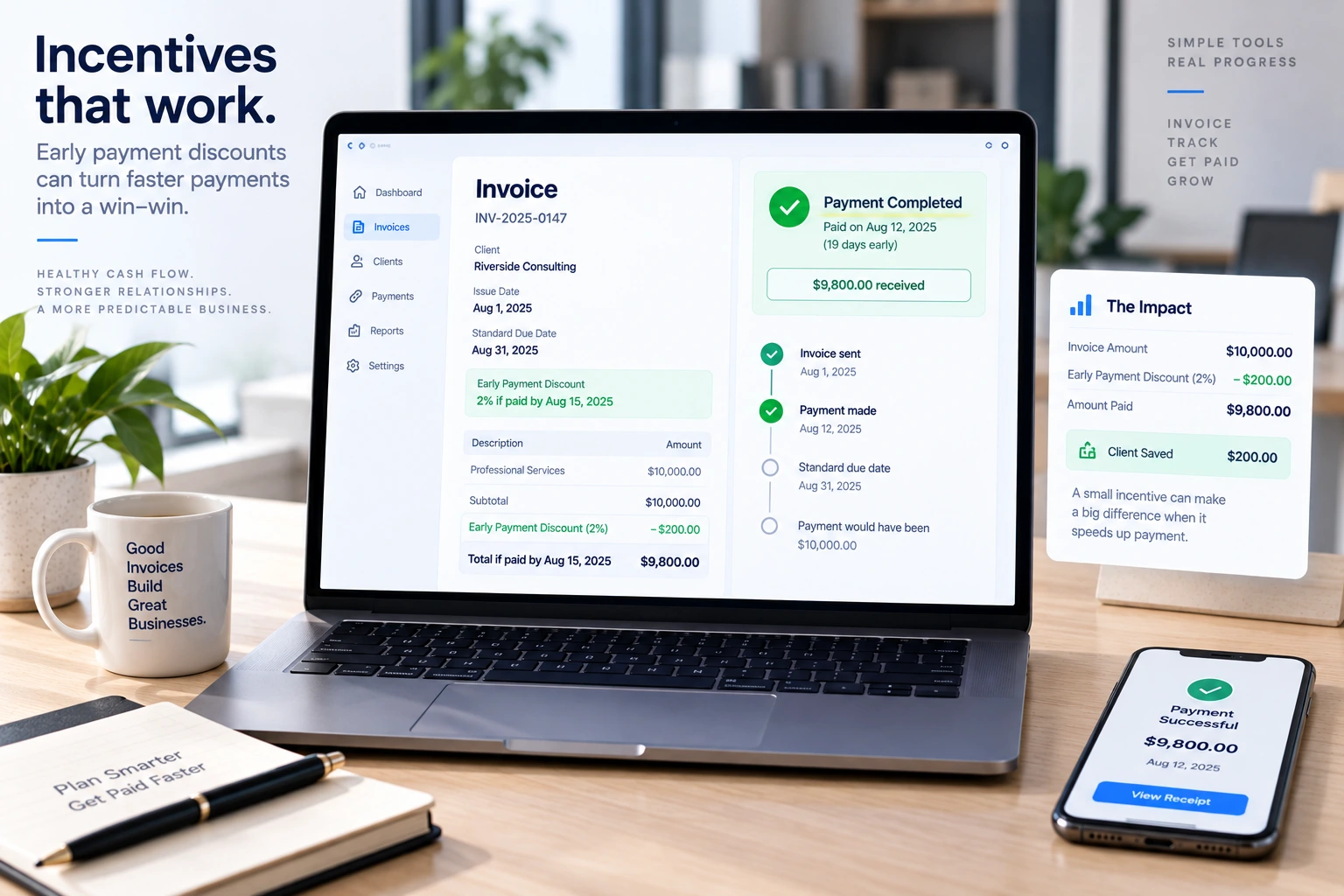
Examples include:
Two to five percent early payment discounts
Priority service for clients who pay early
Even small incentives can improve payment behavior significantly, but it's worth running the math before offering one. A 2% discount on a $10,000 invoice costs $200. If that discount reliably moves payment from 45 days to 10 days, and the cash unlocked lets you avoid a short-term financing cost or missed opportunity worth more than $200, it's a good trade. If the client would have paid within a reasonable window anyway, the discount is a cost with no real behavior change behind it. Worth testing on a specific client relationship rather than applying blanket-wide without checking whether it actually shifted anything.
Charge Late Fees When Necessary
Sometimes clear consequences are necessary.
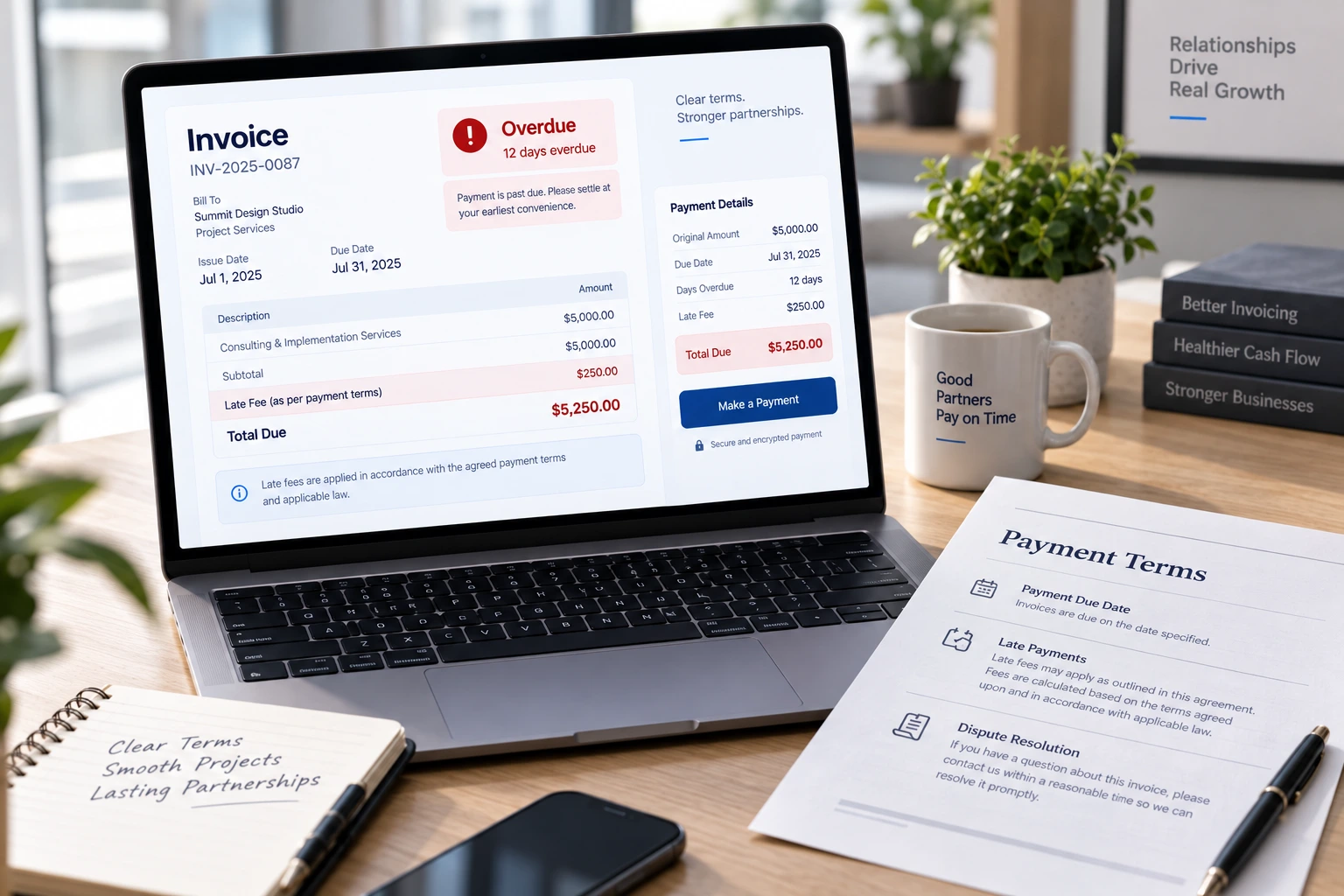
To apply late fees effectively:
Mention them upfront in payment terms
Keep fees reasonable
Apply them consistently
What "reasonable" means has an actual legal answer in some jurisdictions, not just a judgment call. In the UK, the Late Payment of Commercial Debts (Interest) Act 1998 automatically entitles businesses to charge statutory interest of 8% above the Bank of England base rate on overdue B2B invoices (roughly 11.75% per year as of mid-2026, since it moves with the base rate), plus fixed compensation of £40 to £100 per invoice depending on the debt size, even if your contract never mentions it. In the EU, the Late Payment Directive (2011/7/EU) sets a default maximum B2B payment term of 60 days and entitles creditors to interest at 8% above the European Central Bank's reference rate plus a minimum €40 compensation per overdue invoice, rules that remain in force across member states regardless of what your own contract says. If you invoice clients in either region, checking what you're automatically entitled to is worth more than guessing at a "reasonable" late fee percentage. Alfaa's guide to invoice types covers how a late fee should actually be documented once you've decided on one.
Invoice management software can automate late fee calculations and reminders.
What to Do When a Payment Is Already Overdue: Follow-Up Templates
Once reminders haven't worked, the wording of your follow-up matters. A few templates for the escalating stages:
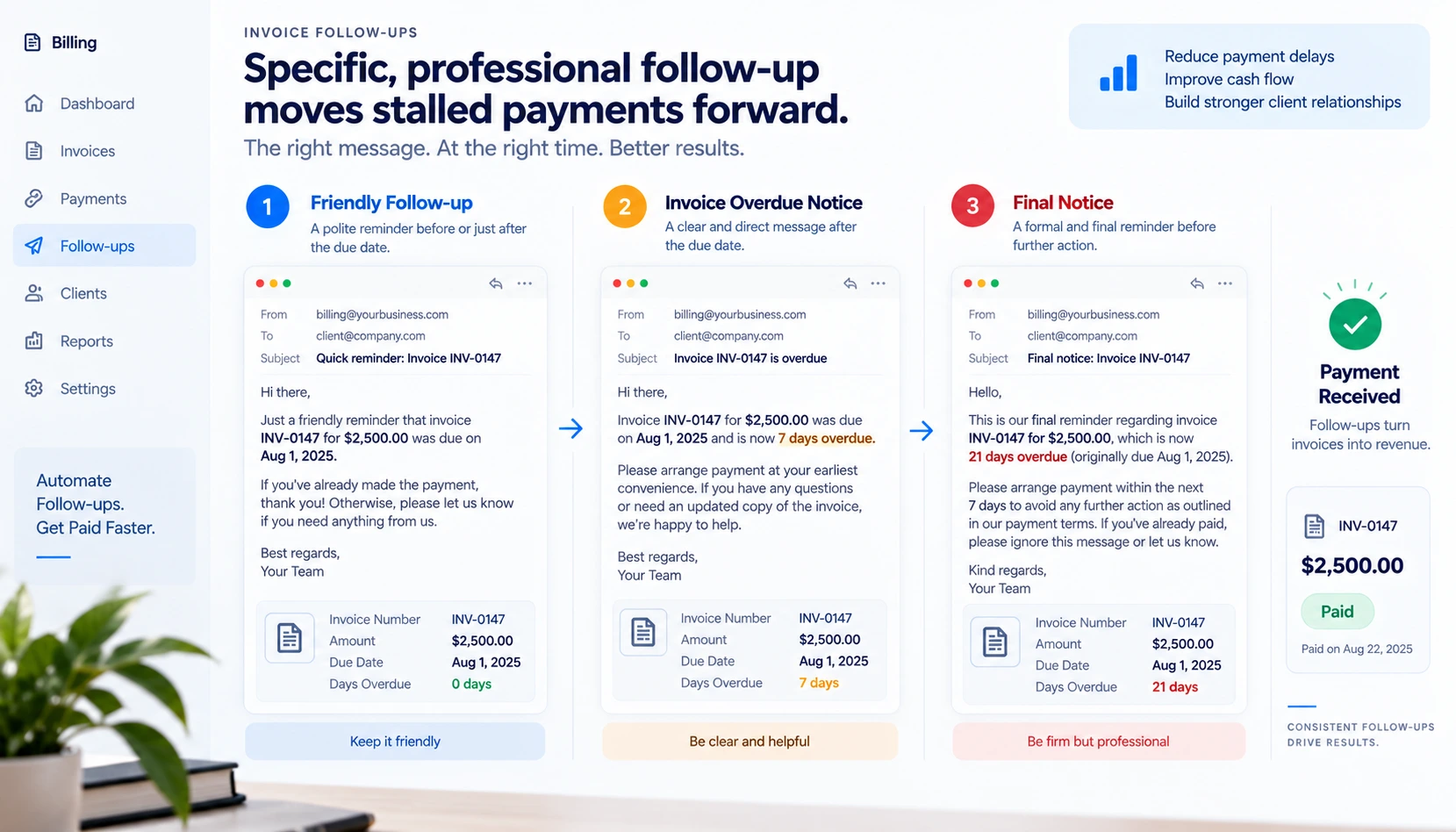
Adjust the tone to match the relationship, but keep the amount, invoice number, and due date explicit at every stage, that specificity is what actually moves a stalled payment.
Build Strong Client Communication
Strong communication reduces payment friction.
Best practices include:
Confirming invoice receipt
Following up professionally
Keeping communication polite but clear
Clients respond better when communication feels organized and professional.
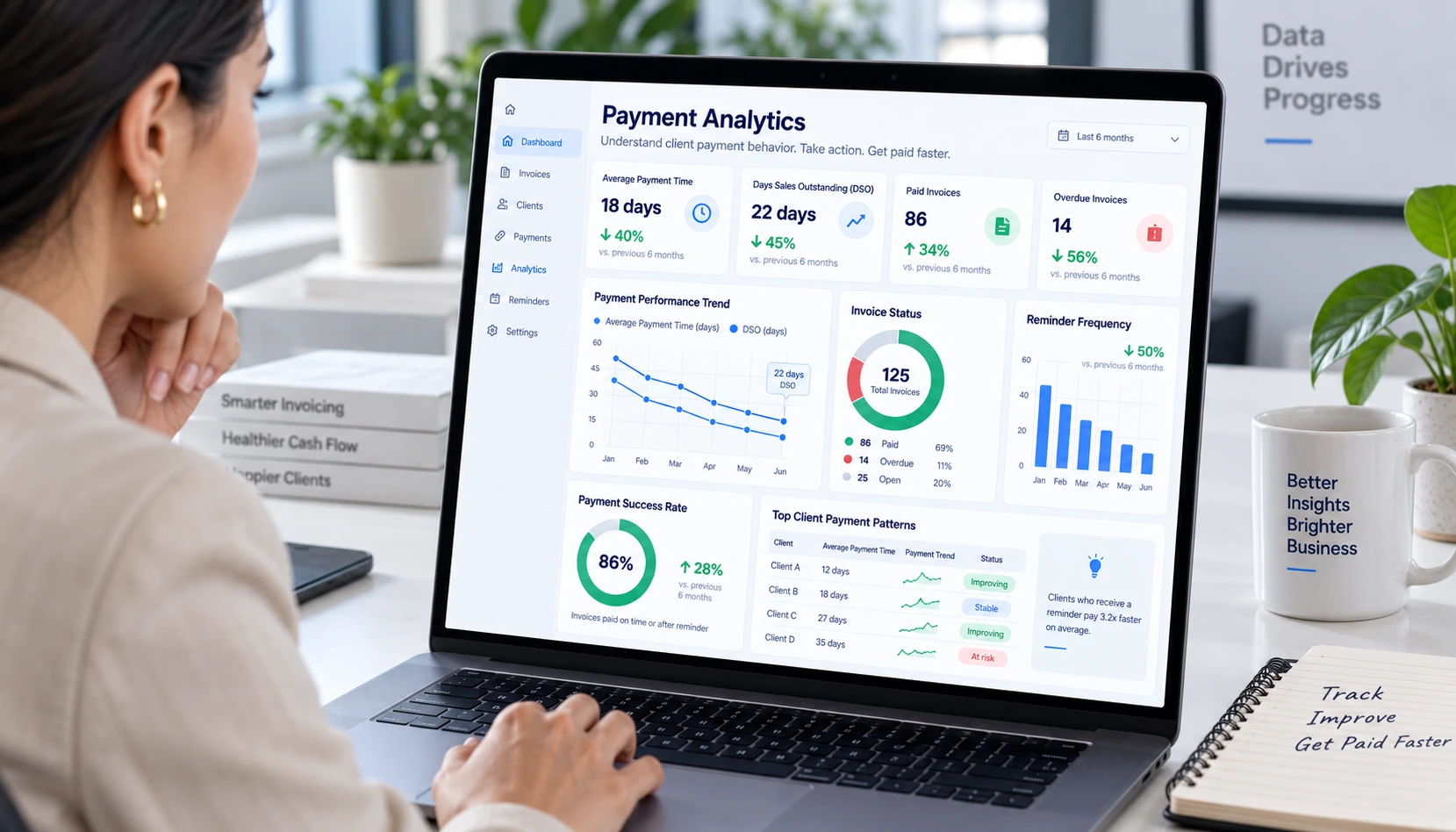
Track and Analyze Payment Patterns
Understanding payment behavior helps improve your invoicing process.
Track metrics such as the following:
Average payment time
Which clients need reminders most often
Invoice success rates
Your overall DSO trend month over month, as covered above
If certain clients consistently pay late, you can adjust terms accordingly, such as shorter due dates, a required deposit, or a card on file going forward. Alfaa's payment tracking provides this visibility in real time.
Use Recurring Invoices for Regular Clients
For ongoing projects and retainers, recurring invoicing simplifies billing.
Benefits include:
Time savings
Consistent billing schedules
Reduced risk of forgotten invoices
Recurring invoice software automates monthly invoicing for repeat clients.
Late Payments With International Clients
Cross-border billing introduces delay sources that don't apply domestically: currency conversion timing on the client's end, banking networks that take longer to clear an international transfer, and public holidays in the client's country that you may not be tracking. None of this means an international client is paying late out of any different intent, the delay is often structural rather than behavioral.
A few adjustments help:
Build a few extra days into your expected payment window for international clients rather than applying the same due date logic as a domestic one.
Make sure the currency and any tax ID requirements on the invoice itself are correct for the client's country, a rejected or query-generating invoice on their end adds real delay. Alfaa's guides to invoicing an international client without a local bank account and multi-currency invoicing cover what to check.
Where possible, offer a payment method your client's bank can process quickly, a payment stuck in an unfamiliar international wire process can add days that have nothing to do with the client's willingness to pay.
How Alfaa Helps You Get Paid Faster
Alfaa combines online invoice generation with invoice automation software to help businesses reduce payment delays.
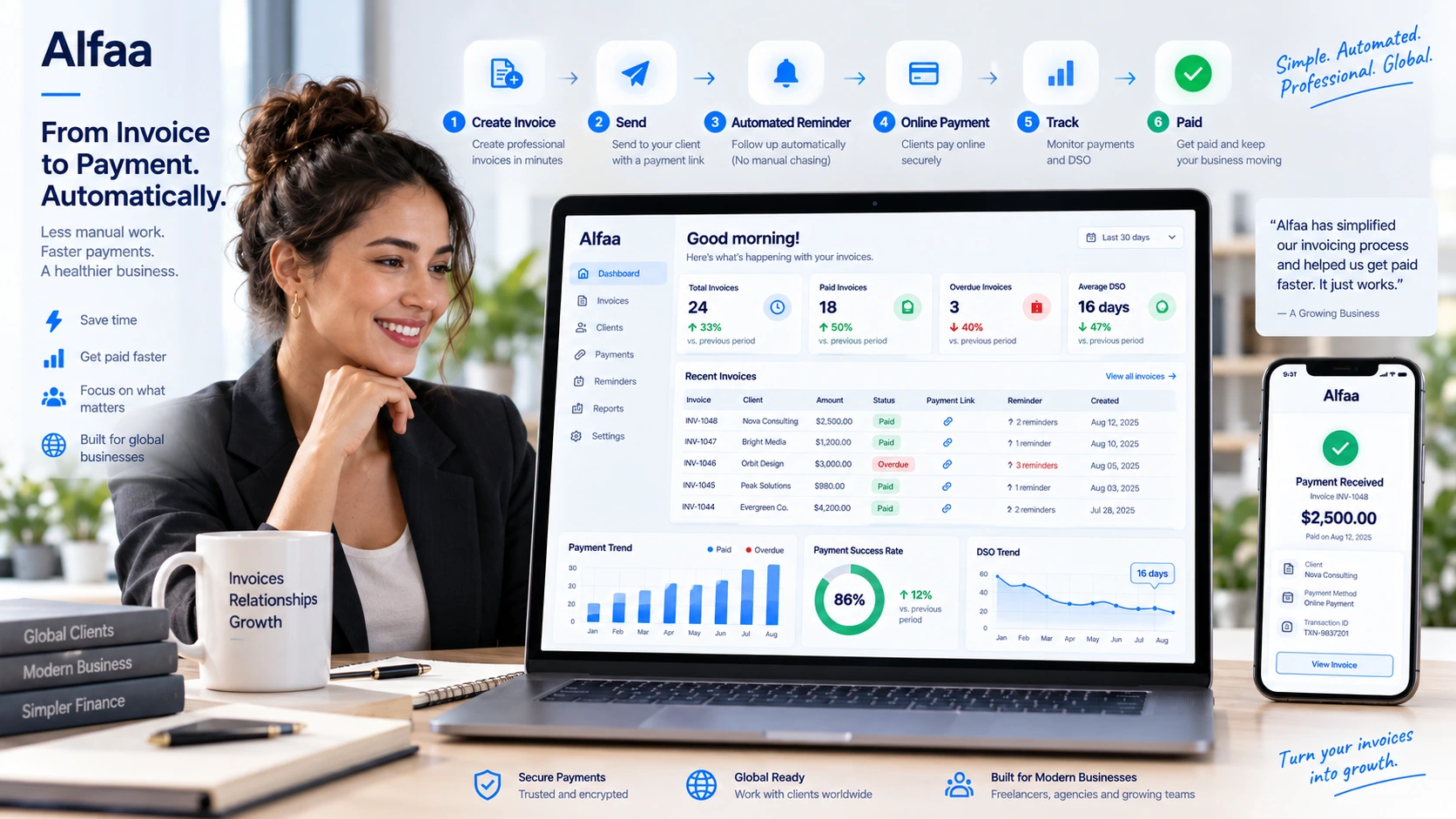
With Alfaa, you can:
Create and send invoices instantly
Automate payment reminders on a schedule, not just a one-off send
Accept payments easily
Track invoice status and DSO trends in real time
Instead of manually chasing invoices, businesses can automate their billing workflow and improve cash flow consistency.
Start reducing late payments today with Alfaa.
Conclusion
Late payments do not have to be a normal part of running a business.
By combining prevention (client vetting, deposits, tiered terms), clear payment terms, faster invoicing, automation, a real reminder cadence, and a way to measure whether it's working (DSO), businesses can improve cash flow and reduce payment delays significantly.
The key is consistency and knowing, with an actual number, whether what you're doing is working.
With the right invoicing system in place, getting paid becomes smoother, faster, and far less stressful.
Frequently Asked Questions
Keep your message professional, friendly, and clear. Mention the invoice number, due amount, and payment date without sounding emotional.
Net 7 and Net 15 payment terms typically result in faster payments compared to longer billing cycles.
Yes. Automated reminders improve payment consistency and significantly reduce missed or delayed payments.
Yes, if they are clearly communicated upfront and applied consistently.
It depends on your stated terms, but Net 30 is the most common default for B2B service work. Tracking your own DSO over time is more useful than comparing against a generic industry number, since it shows whether your specific client base is improving or not.
In the UK, yes, automatically, under the Late Payment of Commercial Debts (Interest) Act 1998, even without a contract clause. In the EU, the Late Payment Directive provides similar automatic rights. In the US, this depends on state law and whether your contract specifies a late fee; check your state's rules before assuming a specific rate is enforceable.
Three or four automated reminders spread across the due date and the following few weeks is typical. Beyond 30 days overdue, it's usually more effective to move the conversation to a direct call rather than continuing with written reminders.
DSO (Days Sales Outstanding) measures the average time it takes to collect payment across all your invoices, not just the ones currently overdue. It's the metric that shows whether your overall payment speed is improving or worsening over time, rather than reacting to individual late invoices one at a time.
Not necessarily. Shorter terms or a required deposit for new clients with no payment history, moving to standard terms once they've established reliability, is a reasonable and common approach.
Yes. An invoice a client is quietly unsure about often just sits rather than getting flagged, which can extend payment far longer than a simple oversight would. Confirming receipt and inviting questions upfront surfaces disputes earlier, when they're faster to resolve.

Olivia Bennett
Content Writer @ Alfaa
Olivia is a content writer at Alfaa who specializes in invoicing, small business, and productivity topics. She enjoys simplifying complex ideas into clear, practical insights that help business owners save time, get paid faster, and stay organized.