Proforma Invoice: What It Is and When to Use One
By ALFAA Team
Stay in the loop
Get finance tips delivered to your inbox.
A proforma invoice is a preliminary bill of sale a seller sends to a buyer before a transaction is confirmed or completed. It looks like a real invoice, lists the same kind of detail, pricing, items, and terms, but it isn't a request for payment, and it isn't a tax document.
Most guides stop there. What they don't cover is what actually happens next: what you do if a client pays against a proforma invoice anyway, how long the quoted price should stay valid, whether tax belongs on it at all given it has no legal standing, and when a independent contractor or small agency genuinely needs one instead of just sending a quote. This guide covers the definition briefly and then spends most of its time on those practical questions.
What Is a Proforma Invoice?
A proforma invoice is a document that looks like an invoice but creates no legal obligation to pay. It's typically sent after a buyer has indicated real intent to purchase, more formal and definitive than a quote, but before the sale is finalized or the work is delivered.
The key differences from a standard invoice:
Not legally binding. A proforma invoice doesn't obligate the buyer to pay.
No tax standing. It isn't an official accounting document and has no bearing on VAT, GST, or sales tax filings.
Clearly labeled. The document should say "PROFORMA" prominently to avoid being mistaken for a real invoice or payment demand.
No official invoice number. It should carry a reference number for tracking, but not the sequential invoice number used in your actual accounting records.
A quote, by comparison, is a ballpark estimate sent earlier in the sales process, before the buyer has committed to anything. A proforma invoice sits a step further along: the buyer has effectively said yes, and the document formalizes what they've agreed to before the final, binding invoice follows. Alfaa's breakdown of invoices vs. receipts vs. bills covers the same kind of document confusion at the other end of the transaction, worth a read if the full set of document types tends to blur together.
Proforma Invoice vs. Quote vs. Standard Invoice: A Decision Framework
Most guides explain the differences between these three documents in the abstract. In practice, the decision is simpler than it reads:
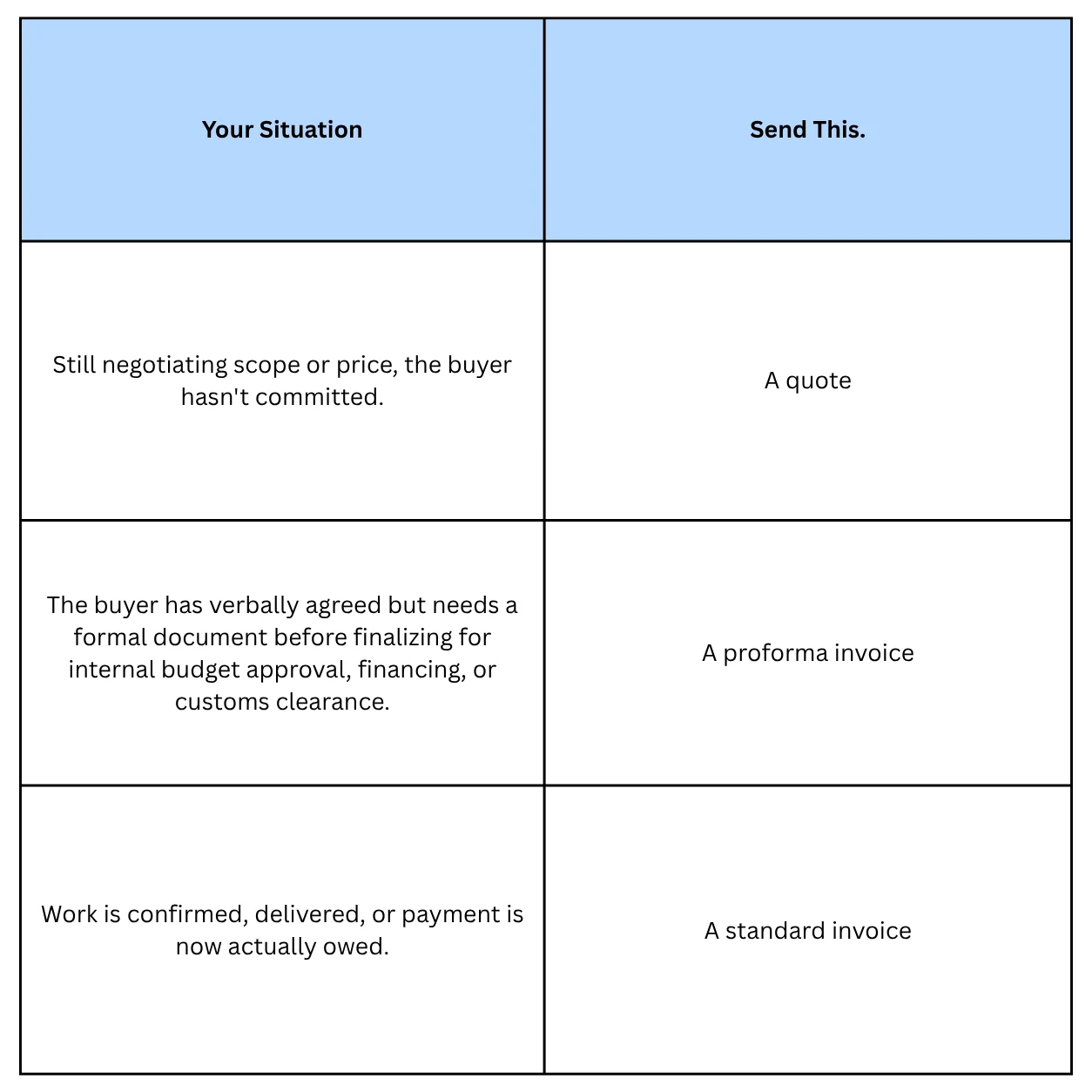
For most independent contractors and small service businesses, a proforma invoice is the least-used of the three, and that's correct. If a client is ready to move forward and there's no internal approval process, financing step, or customs requirement standing between the agreement and the work starting, a standard invoice with clear terms does the job without the extra document. A proforma invoice earns its place specifically when something, a buyer's finance team, a bank, or a customs authority needs to see formal numbers before the transaction can actually proceed.
What Happens If a Client Pays Against a Proforma Invoice?
This comes up more than the standard guides acknowledge, and the mechanics matter. A proforma invoice isn't a tax document, so a payment received against one doesn't settle anything in your books on its own.
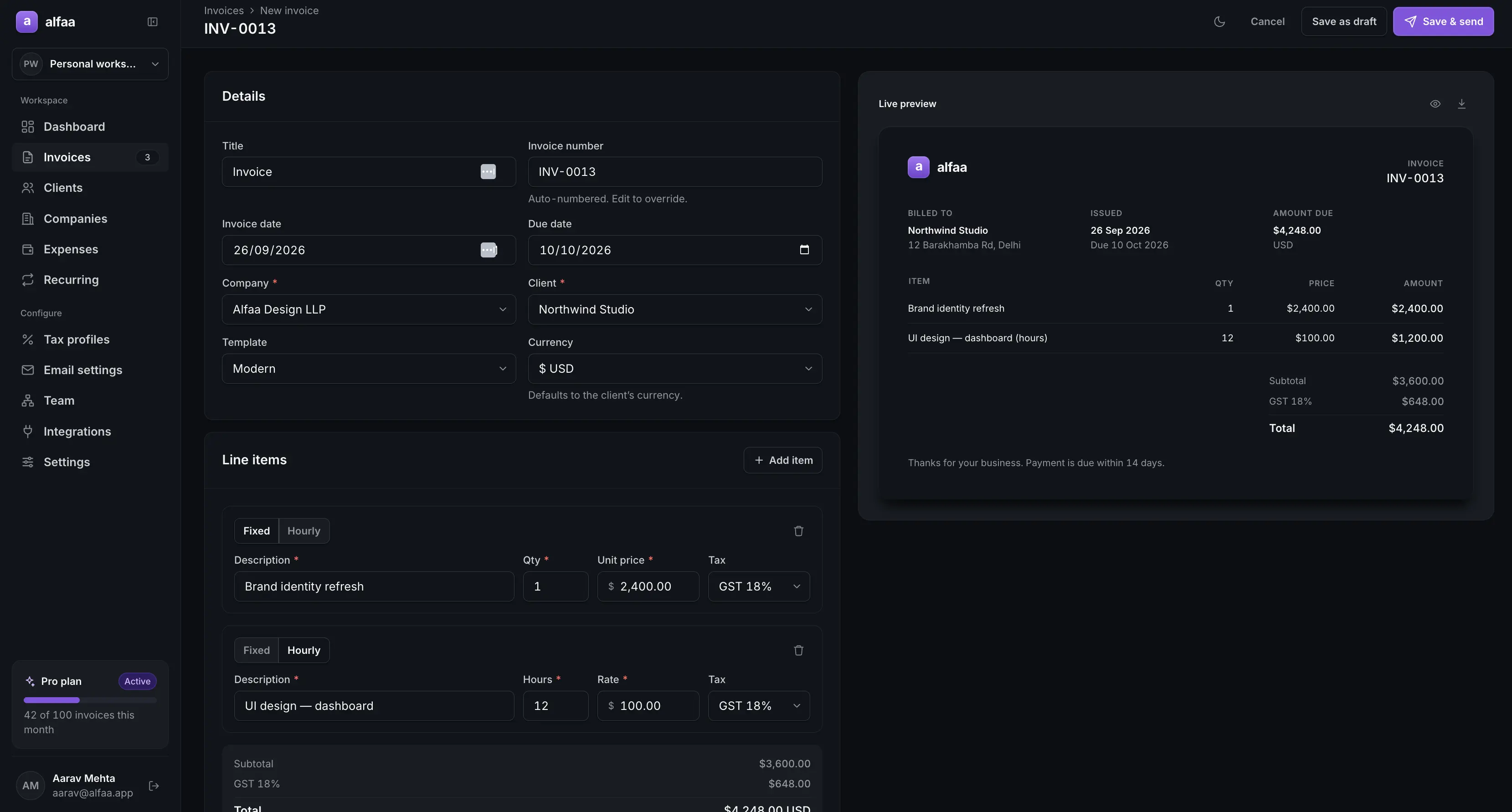
If a client pays before you've issued a real invoice:
Record the payment as an advance or deposit received, not as revenue recognized against the proforma itself, since the proforma has no accounting standing to recognize revenue against.
Issue a proper invoice promptly, referencing the original proforma's reference number, so there's a clear paper trail connecting the payment to the formal document that actually settles it.
Reflect the payment already received on that invoice, showing the amount paid and any balance still outstanding, rather than presenting the invoice as if payment is still pending in full.
How Long Should a Proforma Invoice Stay Valid?
An open-ended proforma invoice creates a real problem: costs, exchange rates, or material pricing can shift between the date you send it and the date a buyer actually confirms. State a validity period explicitly, commonly somewhere in the 15-30 day range for most service engagements, though this should flex based on how volatile your pricing inputs are.
If a buyer confirms after the stated validity period has passed, reissue the proforma with current figures rather than letting an outdated one convert directly into a final invoice. This is especially relevant for anything priced in a foreign currency, covered next.
Currency and Exchange Rate Risk on a Proforma Invoice
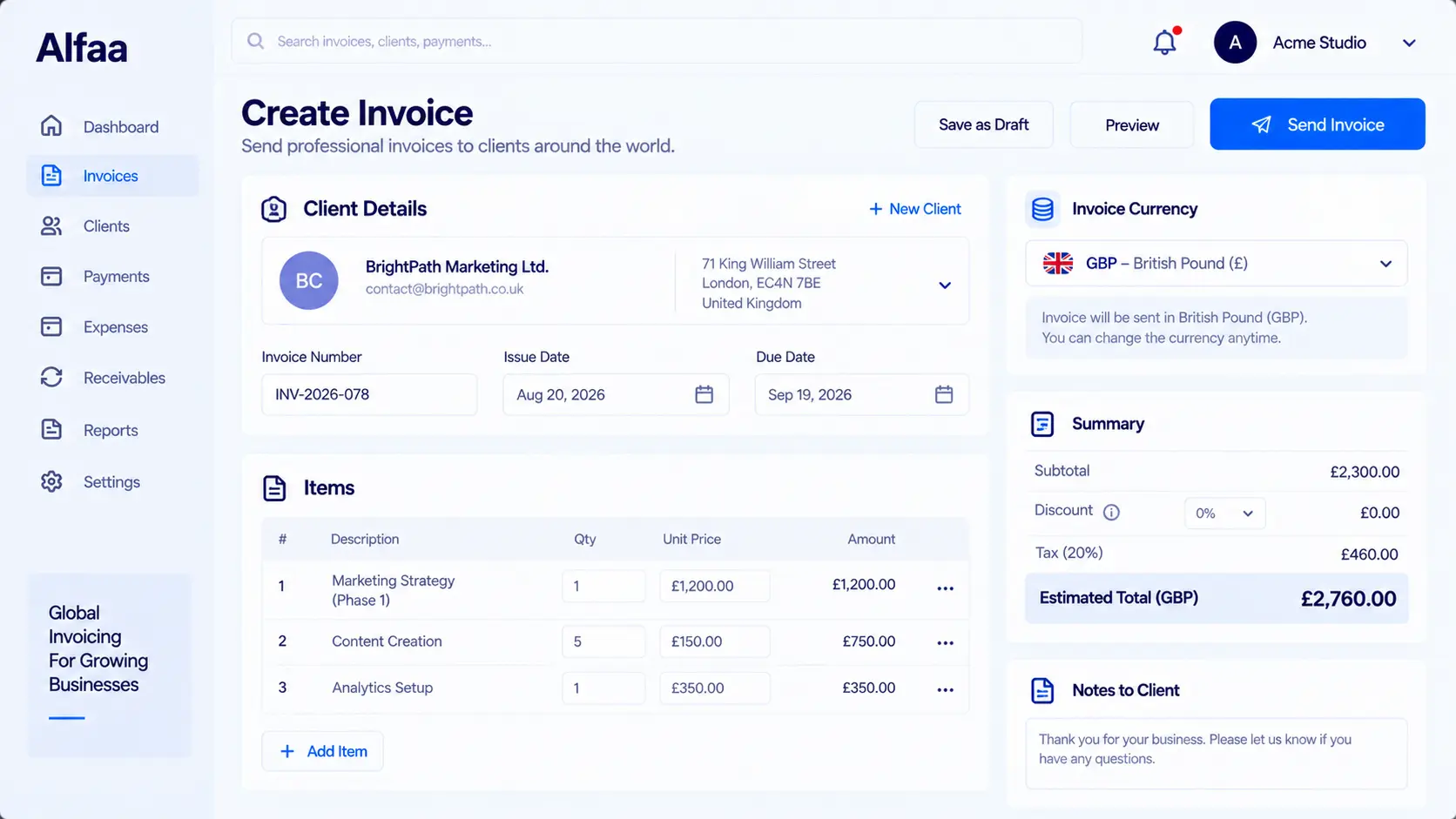
If a proforma invoice is quoted in a client's currency or in a third currency, and weeks pass before they confirm, exchange-rate movement during that window can meaningfully change what the eventual payment is actually worth once converted. This is a real risk with zero coverage in most guides on this topic.
A few ways to handle it:
Quote in your own currency and let the conversion happen on the client's side at the time of actual payment, which keeps your side of the risk at zero.
Lock a rate for the stated validity period if you're quoting in the client's currency, and be explicit that the quote expires along with that validity window.
Build in a re-quote trigger for a longer sales cycle, stating that if the relevant exchange rate moves beyond a set threshold before confirmation, the proforma will be reissued at current rates.
Alfaa's guides to multi-currency invoicing and choosing a currency when a client is in a weaker-currency country cover this risk in more depth for the final invoice stage, the same thinking applies earlier, at the proforma stage, for anything with a real gap between quoting and confirming.
Does a Proforma Invoice Need to Show Tax?
Most guides on this topic state plainly that a proforma invoice "isn't a tax document" and then show a GST or VAT line in their own example templates a few paragraphs later. That's not actually a contradiction, but it's rarely explained clearly.
A proforma invoice can and often should show an estimated tax amount so the buyer isn't surprised by the final number, without that estimate carrying any legal or tax-filing weight. The distinction: the tax line is informational, helping the buyer budget accurately, not a tax calculation the document itself is responsible for or that gets reported anywhere. The actual tax obligation, and the figure that matters for filing, is established only once the real invoice is issued.
Proforma Invoices for International Shipping and Customs
For physical goods crossing borders, a proforma invoice plays a specific role: customs authorities and banks use it to estimate duties, verify declared value, and process documentation like export licenses or trade financing before the shipment itself moves.
Where this goes wrong in practice: if the figures on the proforma invoice and the final commercial invoice don't match, customs can flag the shipment for additional scrutiny or delay clearance while the discrepancy is sorted out. Keeping the proforma figures as close as possible to the eventual final invoice, rather than treating it as a rough placeholder, avoids this friction.
This section applies specifically to goods shipments. For a service business, the customs use case generally doesn't apply at all, covered next, though the broader documentation questions that come up billing internationally are covered in Alfaa's guide to invoicing an international client without a local bank account.
Proforma Invoices for Independent Contractors and Service Businesses
Most guides on this topic default to goods-shipping examples, which leaves independent contractors and small agencies without a clear answer on whether this document applies to them at all.
It does, in a narrower set of situations than the shipping use case suggests. A proforma invoice is worth sending when a client's own process requires a formal document before work or payment can proceed: their finance team needs it for internal budget approval, a larger client requires one to process a new vendor, or a client needs documentation to justify an expense internally before signing off. A large project engagement with an enterprise client is a common trigger; a quick project for a small business client usually isn't.
For most day-to-day independent contractor and small-agency work, a proforma invoice is unnecessary overhead. A clear quote followed by a standard invoice once work is confirmed covers the same ground without an extra document to track and reconcile later. Virtual assistants juggling several small clients are a good example of the segment that rarely needs one; a larger agency client with an internal procurement process is the more likely exception.
What to Include on a Proforma Invoice
Keep the proforma invoice format close to a standard invoice, with a few deliberate differences:
Seller and buyer details
A clear "PROFORMA" label, prominent enough that it can't be mistaken for a payment demand, the same attention to clarity that makes an invoice read as professional in the first place
Description of goods or services, itemized
Estimated total, including any estimated tax shown for the buyer's planning purposes
A stated validity period
A reference number (not your sequential invoice number)
Converting a Proforma Invoice into a Final Invoice
Once a buyer confirms, the proforma doesn't become the final invoice, a new, properly numbered invoice replaces it.
The practical steps:
Confirm any details that may have changed since the proforma was issued (final quantities, updated pricing, confirmed delivery, or project dates).
Issue the final invoice with your standard sequential invoice numbering, referencing the proforma's reference number for a clear audit trail.
Keep both documents on file, the proforma shouldn't be deleted once it converts, since it may still matter for customs records, internal client approvals, or your own dispute resolution later.
Alfaa's guide to invoice types covers how a final invoice should reference a prior document cleanly, the same principle that applies to crediting or correcting any invoice applies here. Once you're ready to issue the real invoice, Alfaa's free invoice generator handles the conversion without re-entering client or line-item details from scratch, the same time-saving logic covered in Alfaa's invoice automation guide for recurring and repeat billing generally.
How Alfaa Handles Proforma Invoices
Alfaa lets you create a proforma invoice from the same template and client records you'd use for a standard invoice, so converting it later doesn't mean rebuilding the document. Multi-currency support carries through from the proforma stage to the final invoice, useful for exactly the exchange-rate scenario covered above, and client details stay saved so nothing needs re-entering once a quote turns into a confirmed engagement. That same record-keeping is just as useful from a phone between client meetings as it is at a desk.
Create your first invoice with Alfaa.
Conclusion
A proforma invoice is a tool for clarity and commitment before a sale finalizes, not a substitute for an invoice and not a document with any tax or legal standing on its own. Its real value shows up in the details most guides skip past: how long the quoted numbers should hold, what happens to currency risk while a buyer deliberates and what to do with the money if it arrives before the formal invoice does. Get those right, and the document does exactly what it's meant to: remove ambiguity before the transaction, rather than create it.
Frequently Asked Questions
No. A proforma invoice doesn't obligate the buyer to pay and has no legal standing as a demand for payment. It's a formal estimate, not an enforceable request.
No. A proforma invoice isn't an official accounting document and has no bearing on VAT, GST, or sales tax filings, even if it shows an estimated tax line for the buyer's reference.
Record the payment as a deposit or advance, not as revenue against the proforma itself, then issue a proper invoice promptly that references the original proforma and reflects the amount already received.
There's no universal rule, but stating an explicit validity period, often 15-30 days for service engagements, prevents an outdated quote from converting directly into a final invoice after costs or exchange rates have moved.
For most day-to-day engagements, a quote followed by a standard invoice is enough. A proforma invoice is worth the extra step when a client's own process, internal budget approval, vendor onboarding, or customs documentation specifically requires one.
It shouldn't carry your official sequential invoice number, since that could create confusion with real accounting records. Use a separate reference number instead, one you can still track and cross-reference once the final invoice is issued.
A proforma invoice is an estimate with no legal standing, sent before a sale is finalized. A down payment invoice is a real, legally valid invoice requesting partial payment against a confirmed sale, an entirely different document once the engagement is actually underway. For larger projects billed in structured installments rather than a single down payment, Alfaa's comparison of recurring invoices, one-off billing, and installment billing covers how that third model works.

Olivia Bennett
Content Writer @ ALFAA
Olivia is a content writer at ALFAA who specializes in invoicing, small business, and productivity topics. She enjoys simplifying complex ideas into clear, practical insights that help business owners save time, get paid faster, and stay organized.